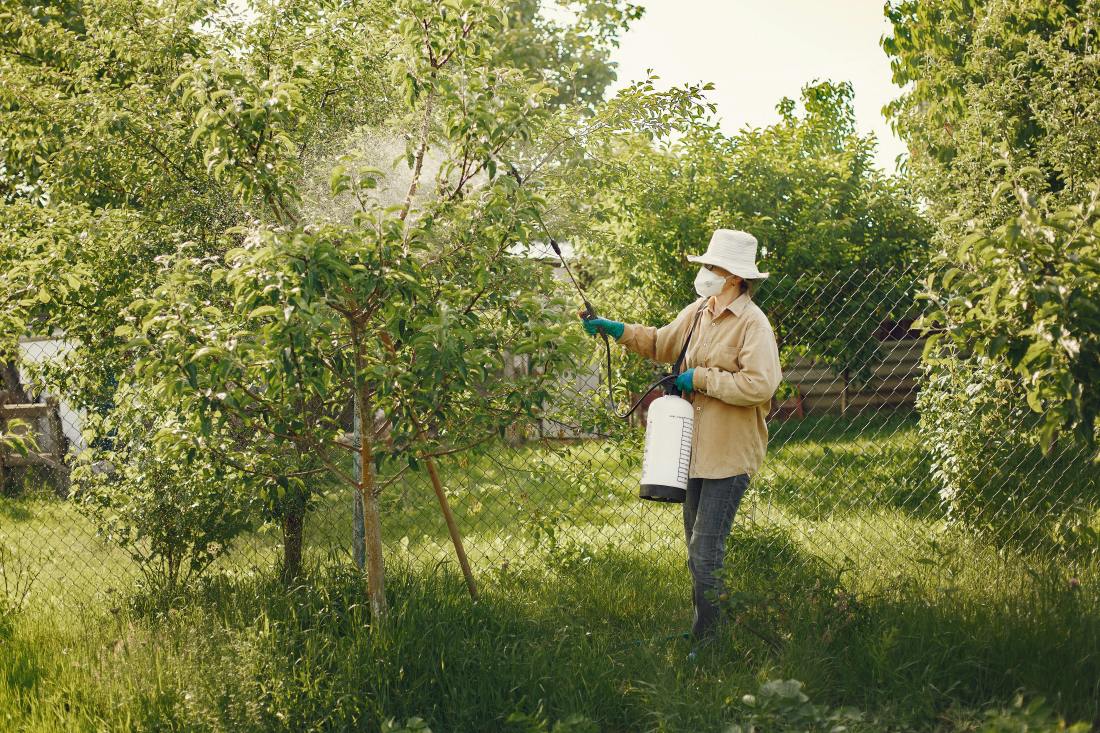
When I smell the fake-sweet chemical odor that signals my neighbor has hired a “pest” control service or sprayed his lawn with herbicides, I close my windows and want to run rather than talk to him.
But pesticides and herbicides damage our health and that of our pets, wildlife, plantlife, air, water, and soil, so we have to talk to each other about toxic lawncare and safer choices. After I and one of my cats went through health crises caused by toxic chemicals, I swore I’d be more outspoken about the poisons that disrupt our bodies.
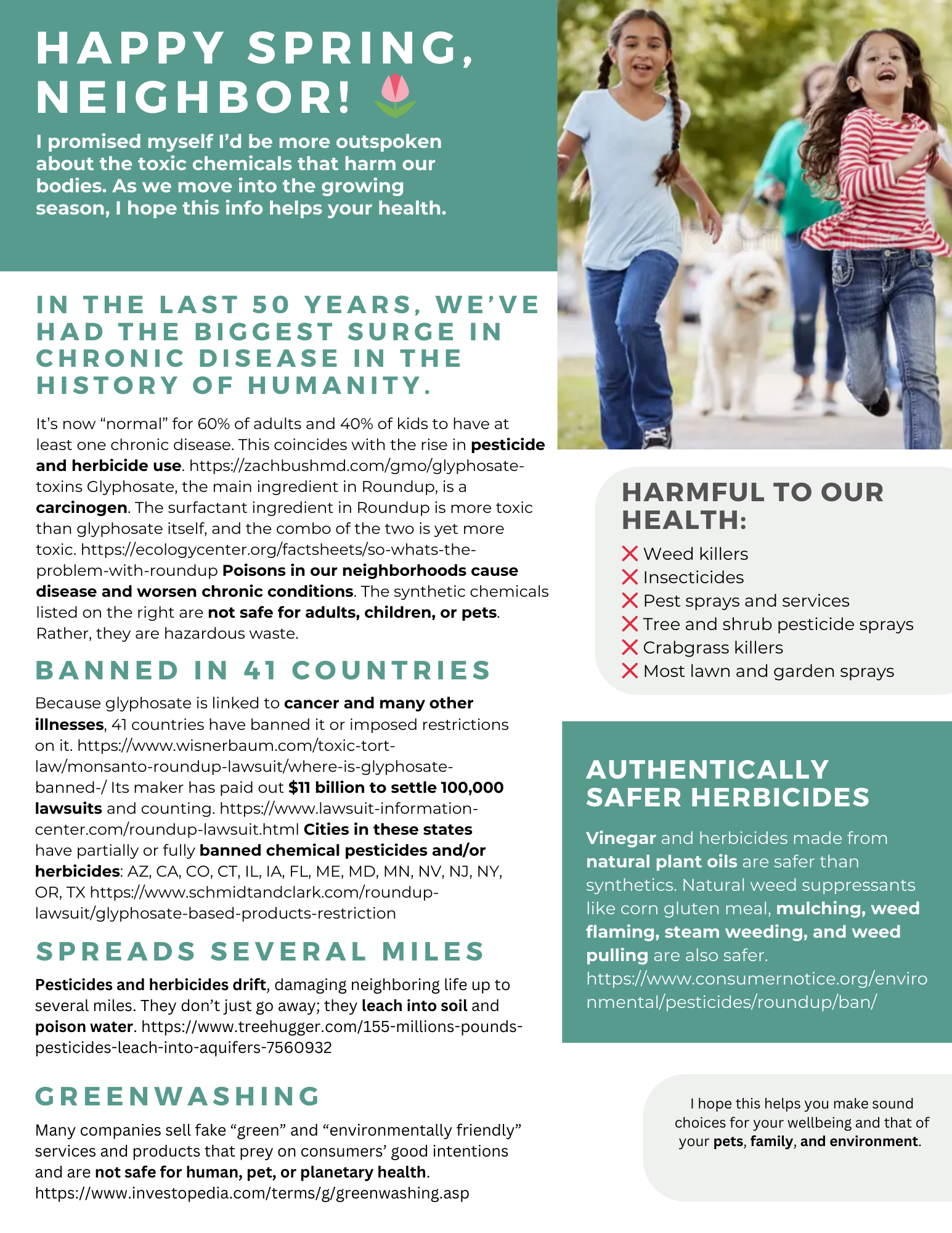
I found that one way to broach the subject is to create a non-preachy flyer educating people on making informed choices. If you’re looking for something diplomatic to pass around your neighborhood, download the flyer at the bottom of this article, or share the following reel. Both summarize the info below.
In the last 50 years, we’ve had the biggest surge of chronic disease in the history of humanity.
It’s now “normal” for 60% of adults and 40% of kids to have at least one chronic disease. These numbers come from the Centers for Disease Control and Prevention (CDC).
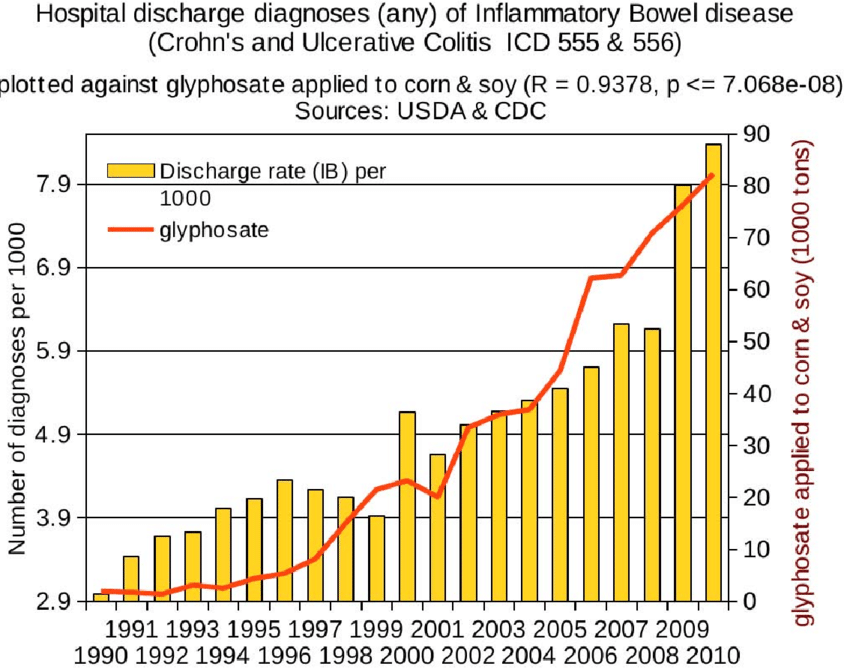
This explosion coincides with the escalation of pesticide and herbicide use over the last 50 years, and particularly the last 35 years. Glyphosate, the main ingredient in Roundup, was registered for use in the U.S. in 1974. In the 1990s, the “Roundup Ready” patented line of crop seeds, genetically modified to be sterile and to live while glyphosate kills everything else around them, hit the market.
Since the introduction of these “terminator” crops in the 90s, chronic disease has skyrocketed. A 2014 study [PDF] revealed that 22 diseases follow the same pattern as that of IBS shown below, steadily increasing since 1991. The 22 diseases include kidney and liver cancer, autism, Alzheimer’s and dementia, Parkinson’s, and other serious conditions that have shortened or thwarted lives. A 2022 study showed that glyphosate crosses the blood-brain barrier and can have “detrimental effects on the human nervous system.”
Glyphosate is a carcinogen. “The surfactant ingredient in Roundup is more acutely toxic than glyphosate itself and the combination of the two is yet more toxic,” reports the Ecology Center.
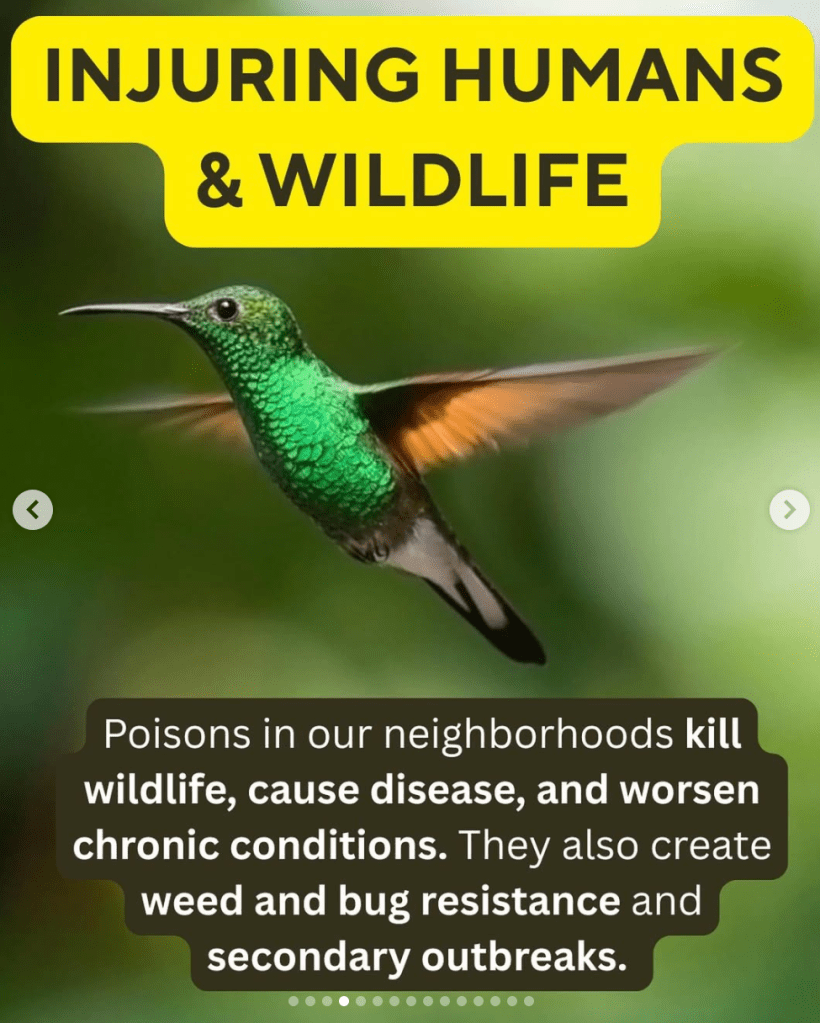
Poisons like glyphosate and other toxic substances (including but not limited to lead, mercury, formaldehyde, benzene, active ingredients in synthetic pesticides, herbicides, and fertilizers, and additives like adjuvants, stabilizers, and dyes) in our neighborhoods cause disease and worsen chronic conditions.
The following synthetic chemicals are not safe for adults, children, or pets. Rather, they are hazardous waste.
- Weed killers ❌
- Insecticides ❌
- Pest sprays and services ❌
- Tree and shrub pesticide sprays ❌
- Crabgrass killers ❌
- Most lawn and garden sprays ❌
Banned in 41 countries
Because glyphosate (as one common example of neighborhood poisons) is linked to cancer and many other illnesses, 41 countries have banned it or imposed restrictions on it. Its maker has paid out $11 billion to settle 100,000 lawsuits and counting. Cities in these states have partially or fully banned pesticides and/or herbicides such as glyphosate and other harmful compounds: AZ, CA, CO, CT, IL, IA, FL, ME, MD, MN, NV, NJ, NY, OR, TX.
Spreads several miles
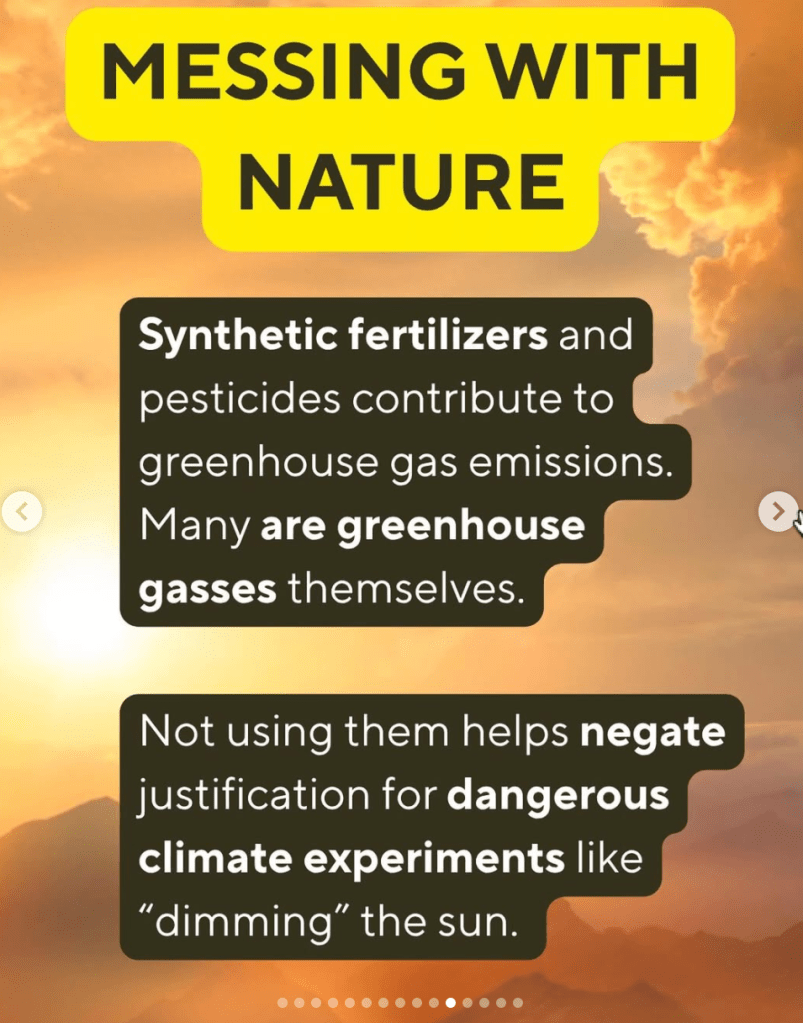
Pesticides and herbicides drift, damaging neighboring life up to several miles. They don’t just go away. They leach into soil, pollute air, and poison water.
Greenwashing
Many companies sell fake “green” and “environmentally friendly” services and products that prey on consumers’ good intentions and are not safe for human, pet, or planetary health.
This includes “green” pest control and “green” lawn care products and services. When you dig deep to discover what’s actually in their products, you find they’re the opposite of safe and eco-friendly. They could be represented as “carbon neutral,” have the word “green” or “nature” in their brand name, purport to be recyclable, or have any combination of false claims. In many cases, the claims of these products and services are clearly counter to logic. Sometimes they’re intentionally misleading with manipulative marketing. In other cases, companies have good intentions but are ignorant or misguided.
More Destruction



Authentically safer herbicides
Vinegar and herbicides made from real plant oils (like neem, thyme, garlic, cinnamon, clove, lemongrass, and wintergreen) are safer than synthetics. Natural weed suppressants like corn gluten meal, mulching, weed flaming, steam weeding, and weed pulling are also safer. Additionally, plants that grow in healthy, fertile soil are less susceptible to weeds and pests. Purchased or homemade compost is solid gold for building rich earth that’s more resilient than weak or dead chemical-laden soil.
 Erin Harris