
How to Not Get Published in the Huffington Post (or Anywhere)

How to Not Get Published in the Huffington Post

Want to get published? Don’t read this expert advice from a professional writer with 20 years of success with rejection. 

When I was starting out as a writer, I studied publications like The Writer and Writer’s Digest for tips on getting published. I read books like Formatting and Submitting Your Manuscript and articles like “What Do Editors Want?”, which were packed with do’s and don’ts for writing query letters and standing out in the slush pile.

Do’s included:

  1. Do address a specific person.
  2. Do tease the article/book/story succinctly.
  3. Do mention any previous publishing credits.
  4. Do demonstrate that you’re familiar with the publication you’re submitting t0.
  5. Do include a self-addressed stamped envelope (and do party like it’s 1996).

Don’ts included:

  1. Don’t overpromise on a delivery date.
  2. Don’t write back asking why if you’ve been rejected.
  3. If you don’t hear back, send a follow-up letter, but don’t include guesses about what happened.
  4. If you get rejected, don’t write back with guesses about what happened.
  5. Don’t resubmit unless revisions are requested.

I spent years applying these and many more tips to my submissions—pretty much all to no avail. In one case, I learned the true meaning of “demonstrate that you’re familiar with the publication you’re submitting to″ when I submitted some Halloween cookie recipes to a Christian magazine for children.

I had studied the magazine and knew they printed seasonal cookie recipes, so I figured I’d done my research. But I think it was the editor herself who elucidated the rejection with a note that the magazine didn’t touch on Halloween.

Or maybe my gentleman friend figured out that Vile Vampire and Ghastly Ghoul cookies were shunned by religious folk.

Whatever the case, now that I think about it, I guess the title “Heavenly Halloween Cookies” probably seemed like an irreverent turnoff too.

So I kept trying, and I kept studying publications, and I kept learning. I went to writers’ workshops and conferences. I got my bachelor’s degree at what was essentially a writing school, which sadly no longer exists. Then I dabbled in that school’s MFA in Writing, which does still exist. And then I ended up copyediting Writer’s Digest books as a freelancer, getting paid to line edit how-to guides like the ones I had cut my teeth on.

Long story short, over the years I learned what to do and what not to do to get published.

And I threw that all out the window recently with a submission to Huff Post.***

Here’s what I did. Do this, and you won’t get published. Or don’t do this, and maybe you will.

It actually started off well.

I had heard at last year’s Content Marketing World that if you email Arianna Huffington directly, you will be published in the Huffington Post. So I wrote to her, mentioning that I’d heard this, and doing all the do’s mentioned above.

Well, all but one. I left out the SASE.

Arianna responded the next day saying that they would love to feature my voice on Huff Post about inner city students. She cced one of the blog editors so I could send that editor my first post, photo, and bio directly.

My coworkers and I were thrilled, not only because this was going to be big for my career, but because this was going to take our work to a new level. We have a blog that thrives by our standards, but this post was all about expanding our reach, potentially to millions, and sharing tips educators can use to handle aggressive student behavior.

So I built the post around what I’ve learned in copywriting and content marketing:

  • Use storytelling to humanize your points.
  • Write the way people talk.
  • Tap into emotion.
  • Demand a click by asking a question.
  • Keep paragraphs short.
  • Break tips into bold subheads for scan-ability.
  • Offer, essentially, a free mini course of your product or service.
  • Write to YOU the reader.

We thought this was all perfect for Huff Post’s Education section. Acknowledging reality, addressing something teachers deal with, and giving strategies to make their jobs better.

Plus, Arianna was down with the concept.

So how could I go wrong?

I received a form rejection letter from the editor. That old familiar “bugger off” that every writer knows all too well:

“We appreciate you taking the time to send this our way. Unfortunately, we are going to pass on it at this time and wish you the best of luck in placing it elsewhere!”

Wait, what?

What happened?

Arianna was down!

And that’s actually the worst kind of rejection note you can get because it doesn’t leave room for follow-up. Though it’s pretty standard for busy editors who don’t have time to tell you why your piece doesn’t fit or what you can do to make it fit.

But here’s the thing.

I’m busy too.

So I broke Cardinal Don’t #2 and #4 above, and offered to break Cardinal Don’t #5.

I had to know why the post was rejected, because, frankly, it rocked. Not because I’m an amazing writer, but because it’s based on an amazing true story told by an amazing educator.

The only thing I could think of was that it was too promotional—maybe my mention of the educator using my company’s training came off as too self-serving. So I wrote to the editor thanking her for considering my post, and saying…

(This is humiliating to share, but I’m doing it anyway, just as I knew it was humiliating to send, but I did that anyway. That said, it’s also one of the keys to not getting published, so if you don’t want to get published, do this):

As I read it again I wonder if it wasn’t a good fit because it felt too promotional. I’d be happy to revise it to focus only on how Maria talked the boy down from violence. I think the takeaways will really help anyone who works in education, so I’m willing to make any changes it would take [oh God!] to give your education readers a step-by-step how-to.

Never do this.

Why?

Because it’s desperate, stupid, and it elicited no response.

Naturally. All the tips tell you that if the door is closed, don’t try to open it. But I kept wondering:

Did Arianna accidentally send me the address of an editor who doesn’t deal with education? Or was my post too promotional? Or did it take too long for me to send it?

I have to admit—it took a month, because I’m a busy editor too. (Tip: if you do want to get published in the Huffington Post or anywhere, don’t let work or life get in the way for more than a week after your query is accepted.)

I knew the value of that tip I just provided, but I figured that they weren’t waiting on the edge of their seats for my post. They didn’t mention a deadline, they have content coming out of their ears, and I have 126 more excuses I could list that could aid your efforts toward not getting published.

So then we considered other content channels, and I submitted to a different blog for educators, but received no response. That made a bit more sense, as that blog is more politically oriented than strategies oriented. So I could live with that.

But the Huff Post thing still didn’t make sense to me.

So I did some research and learned that the editor who was my contact was likely not (if my research was accurate), in fact, the education editor. So I found the education editor and followed her on Twitter. I retweeted her articles. I retweeted other Huff P articles that were related to my topic. I demonstrated that I love reading, writing, and sharing quality content on education.

And then I sent her a revision.

Never do this.

Why?

Because they had already rejected the post, they didn’t ask for revisions, and they weren’t interested.

But I had little to lose. And though I don’t know exactly what Huff Post wants and doesn’t want in posts about education, I have a strong editorial sense about what works and what doesn’t and where. I’m an editor for God’s sake.

Never think this.

Because no matter what your own experience is, you don’t have the full picture about a publication that its editors do.

But even knowing this, I resubmitted anyway.

The body stayed the same, but I changed the intro a little. I removed the possibly-too-promotional mention of the fact that the educator uses our training.

And I changed the title. I put “How to” in there, because you learn how to handle difficult behavior.

And then I didn’t mention that I had submitted the article before. I did this even though I pictured the two editors—the one who wasn’t the ED editor and the one who was—reviewing submissions in a morning meeting with the rest of the editorial team and saying, “Wait, we already decided that this doesn’t fit, right?”

But I did this because a wise friend said, “You don’t know if they review stuff like that, so why hurt your chances. Assume they don’t know each other, and let her consider your post on its merit.”

This didn’t seem likely—the not-knowing-each-other thing–because I work on the CPI blog closely with a colleague, and we often bounce submissions back and forth. But our operation is much smaller.

And I thought “funk it” anyway—if anything, not mentioning to the ED editor that she might have seen a previous draft of my post would save me space in my email and her time in her reading.

And I never heard back, probably because I broke about 50 of the rules of getting published.

BUT!

My post has since gotten picked up by an education publication with thousands of followers, and it’s gotten some decent engagement.

Stay tuned and I’ll share how that happened and how—despite the hilarious title of this post—you CAN get published somewhere, even if it isn’t the Huffington Post.

Because even with all the rejection we writers get, this is the best time in the history of the written word ever in the universe to be a writer.

 ***By the way, the reasons I’m giving here for not getting published are total assumptions and are exaggerated for humor .  . .  I was never told that the reason I got nowhere with my HuffPo submissions was that I was breaking 1990s rules for submitting work.

Image: Thinkstock – zakkum5
Posted in Art, Books, Content writing, Editing, Web marketing, Writing | Tagged , , | 3 Comments

How Margaret Atwood Helps Me Write

OLYMPUS DIGITAL CAMERA

The Captain once sat on my head.

It’s April in Wisconsin, so it’s like it’s still winter. Well, it’s been raining a lot, so maybe it really is spring. But it’s been cold, so before the rain started it felt like nothing was moving.

Last night before I fell asleep my cat stepped on my head to get to the other side of the bed. It reminded me of another time a different cat sat on my head, and how happy it made me because he was basically saying “We’re such good friends that I can sit on your head and you don’t even care–in fact, you think it’s funny, and so do I.”

The Captain had a wonderful sense of humor.

There’s a neighborhood tom who swings by a lot to come and sit on the other side of the window and stare at my current cat. They howl at each other and Henry can’t stand it; the tom is basically saying “I have my balls, so I’m big enough of a cocky bastard to strut by and whiz on your bushes to let you know that I want your territory.”

He does that year round; he even traversed the tundra of my yard on stormy days in January, crossing the frozen bank like a road, or ear-deep in fresh snow and a commitment to showing us that he wants to be boss.

Last night I woke up because there was howling. When I turned on the light, Henry was in the hall with another tom who had followed him through the catflap and was now like “What the fuck am I doing in this foreign house at 2 in the morning?”

What ensued was like something out of a cartoon. The tom tried to scramble the hell out of the hall, but he just ran in place for a while. When he finally gained some ground he slid on the tiles and took a tumble into a bookshelf. Then he tore ass toward the catflap and slammed into it but didn’t pass through–he was a pretty fat cat, and a big fluffy fucker too.

This went on and on with repeated scrambling and repeated attempts at getting out through the flap, and the flap always slamming a second before the sound of claws sliding on the floor precipitated a new crash into a box or a chair. At some point he ended up flying into one of the bedrooms, and I thought “Maybe I’ll close the door and open the window and he can jump out that way,” but just then he shot past me, clambered down the hall, and finally bulleted through the catflap with a bang and a slam.

When I was a teen trying to teach myself how to write, I used to type up pages from Margaret Atwood books–not to a T, but emulating her style. If she had a young female narrator arriving in an unfamiliar town, I had a young female narrator arriving in a cafe. It was pretty fun practice.

This afternoon I read a poem by Margaret Atwood that a friend sent me in a Facebook message a few days ago. I think it’s interesting that I didn’t read the poem till after I had had the two recent cat experiences.

There was no cosmic need to wait to arrive at a similar perspective on the desolation of humanity and our desperation for hope–I have long felt that.

I have no permission to reprint the poem here, but I’m doing it anyway in the spirit of felicitiousness. Felicity? I’ve always loved the word “felicitous” because it means both “marked by general happiness or good fortune” and “very well suited or expressed.”

Actually, please step over to the Poetry Foundation to read Margaret Atwood’s “February.” I’ve never read a more amusing or timely poem that so completely embodies my current existence.

Posted in Art, Books, Writing | Tagged , | 2 Comments

My Room in Roscoff

callanish066

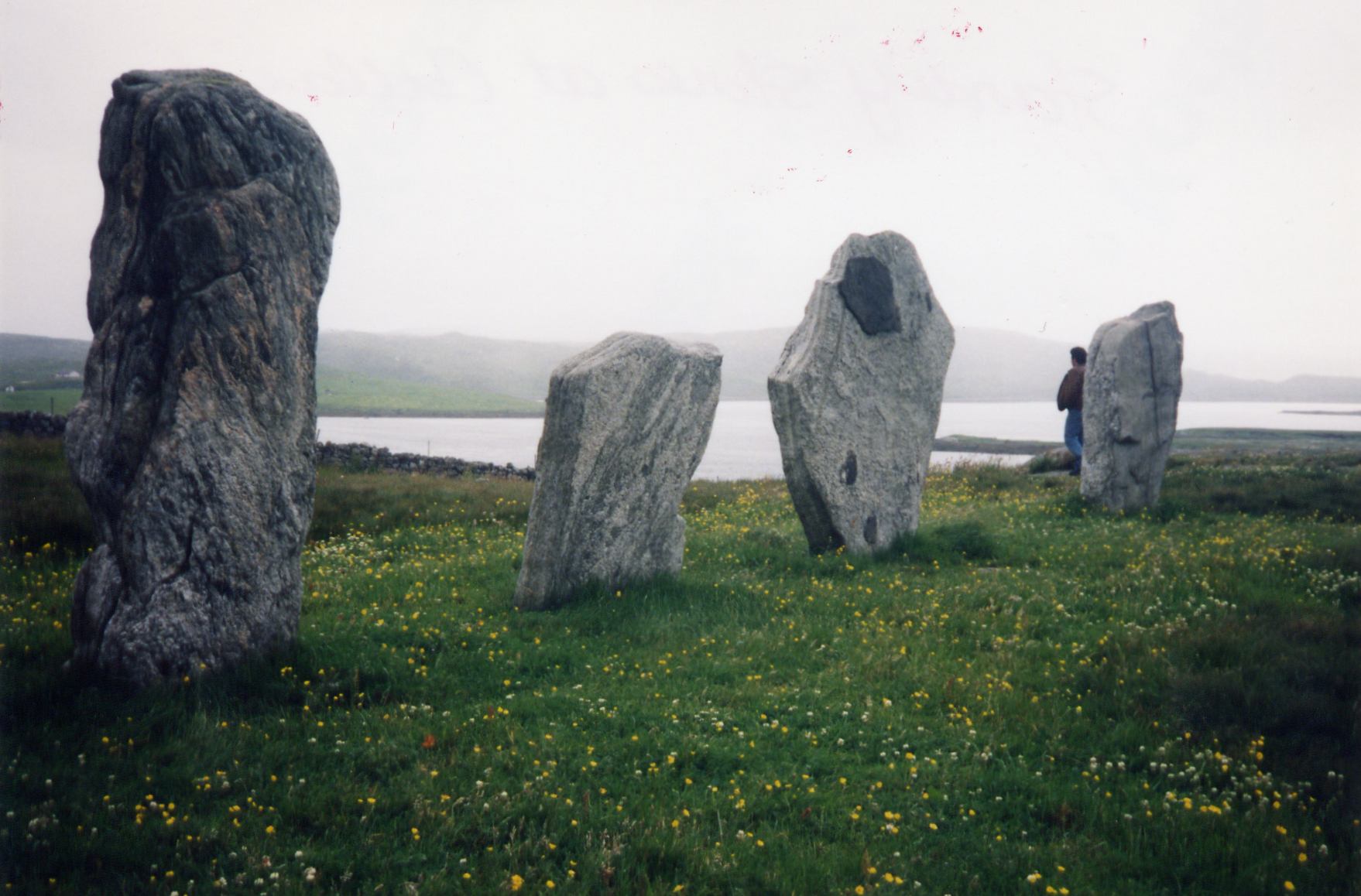
When I was 17, turning 18, I went with my mom to England and Scotland to celebrate my high school graduation. We were based in London in the flat of a friend of my mom’s, and toured the city and traveled around the UK, from Bath to Glasgow to Edinburgh and through the Scottish Highlands and over to the Outer Hebrides and the Isle of Skye and its neighbors, half of one of which was named for our people.

I was in shock for much of the trip, as I had never really been anywhere before.

I was floored by sensation: the curiously clean smell of the London suburb of Richmond; the permeating flavor of green peppercorns in restaurants throughout much of Scotland; the astounding sound of people really saying “Cheerio” and “Jolly good” while actually inhabiting flesh; the reverential feeling of walking among the ancient stones of Callanish and beholding the stupendous artistry of St. Paul’s Cathedral.

We had shitty disposable cameras, but the sights were actually magnificent.

We had shitty disposable cameras, but the sights were actually magnificent.

Toward the end of our trip we found ourselves in Plymouth and realized that it would be easy and fun to take a ferry to France.

I remember the voyage being fairly long, or at least taking place overnight, and settling down for the journey on the crowded floor of the ship with a copy of Dracula or Cujo or whatever paperback I had managed to forage in a tiny train station in Scotland two days before.

We alighted in the morning, a Sunday, and found ourselves steeped in the tranquility of a sleeping village. It must have been the day before Assumption Day, my research indicates, as it was August and everyone on the ferry had said that the banks and the shops would be closed the next day.

All the other passengers must have leaped into rental cars and fled as soon as we arrived, because the town remained lusciously slumberous the whole time we were there.

All in all, I remember four things about those quiet days: picking seashells on the beach; buying, at some point, bread, cheese, apples, wine, and a knife and corkscrew for a picnic; spilling my wine at a cafe; and the view from our hotel room.

The wine incident was one of the things that warmed me to a love of France.

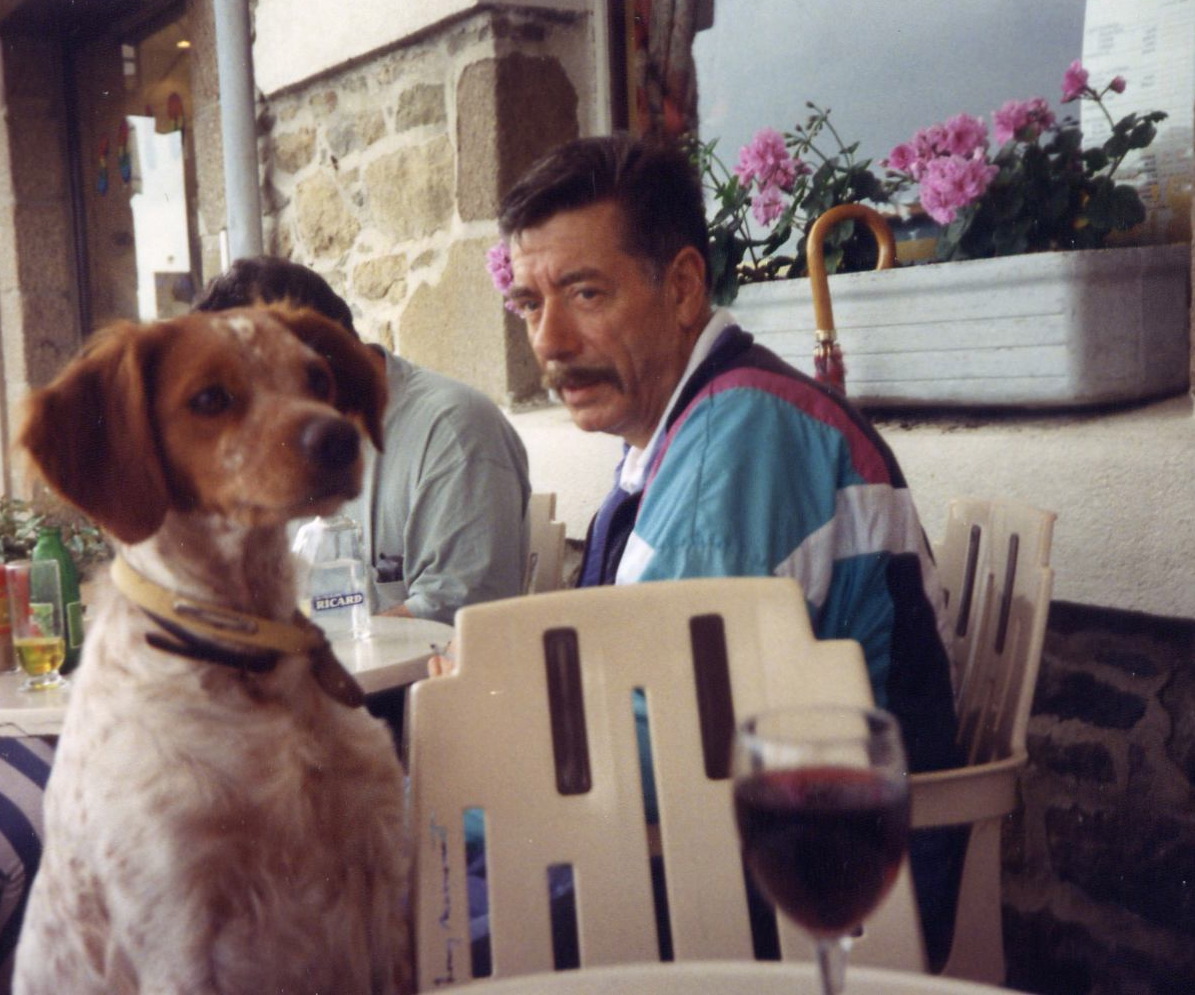
I was embarrassed partially by my nationality and largely by my inability to speak French, so I was trying to say as little as possible other than “Bonjour” and “Merci.” I was in the act of smoking as inconspicuously as possible while people-watching from our perch in a cafe when I became engrossed in developing a friendship with a handsome spaniel, and, without thought or finesse, knocked my wine glass to the ground as I reached to pet the pup.

callanish112

The glass shattered into a million disgracing shards and the liquid splashed my leg and chair and the ground and the dog and half of France. I expected to be banished for the unforgivable faux pas, to be called a stupid American and laughed out of the town, but immediately the man with the dog and his wife and their son and the waiter and the owner and a passerby and half the village jumped up and rushed to my aid, wiping my leg and brushing away the glass and whisking away the mess and earnestly asking “Ca va?” and breezing back with a new glass all garnet and full and doing everything possible to ensure that I was OK and that the mess was gone and that I had everything I needed to be comfortable.

It looks in the picture like the man in the 80s jacket is glaring warningly at the inelegant American teenager to his left, but in fact he’s regarding his dog to ensure that she behaves, that she’s as respectful and courteous and composed as any belle fille de France.

I had already known, both instinctively and through my travels in Britain, that people are generally courteous in most places you travel, but this incident proved to me that despite their reputation, French people can be particularly gracious and kind.

Our hotel room in Roscoff was across the street, and it offered one of the most magnificent views in my memory.

I remember standing in that wooden-floored room above the town in the late afternoon, amid a simple old wardrobe and dresser and two twin beds, looking out the open window at the cobblestones below and the church to my right as the bells rang, feeling that feeling you sometimes get when all of life’s prospects and beauty seem to unfold before you and enfold around you, and thinking, at eighteen years old:

“This is why I’m alive.”

Posted in Travel, Writing | Tagged , , | 1 Comment

How to Get 156 Retweets and 324 Favorites in 52 Minutes

content marketing

Our content strategy at CPI is straightforward. Produce content that’s relevant to our customers and prospects, publish it to the website, and share it on social and in eNewsletters.

What we write about is pretty niche, geared toward educators, healthcare workers, and human services professionals, so our stuff doesn’t often go super berserk on Twitter. It isn’t exactly Twitter’s CFO Misfires With a Private Tweet or These 69 Hilarious Cat Photos Are Gonna Blow Your Mind.

Occasionally we take it by storm, like when the news of Robin Williams’ tragic death went wild, we did a post called Let’s Call It What It Is: Death by Depression. I like to believe that that one was popular not so much because it mentioned Robin Williams, but because my colleague offered some beautiful and important insight into the fact that depression is a disease that can kill—just like cancer or heart disease. We got seven comments on that post (a lot for us), tons of likes and shares on Facebook, a few favorites and retweets on Twitter, and something like 2,638 page views.

Recently we did a post called 5 Things to Do When Someone’s Rude to You. That one got a ton of clicks from our eNewsletters, probably because the title is broader than our usual stuff, which tends to be more specific, along the lines of Stand Up to Bullying With BullyBust! and Workplace Violence: Are You at Risk? OSHA May Think So. Those two posts got 1 retweet and 0 retweets respectively.

That said, even though not all our content gets a ton of engagement, I don’t think it’s conceited to say that our content is outstanding. If you’re a teacher or an administrator or you work in any capacity in a school, our BullyBust post has some very helpful takeaways. And if you have a job in any field, whether you’re on the frontlines of customer service or you’re a CEO of a company, our workplace violence post tells you how to keep your place of employment safe. It just isn’t exactly Which City Should You Live In? or What Classic 80s Comedy Is So the Story of Your Life?

But yesterday a post on bullying went pretty wild for us. It’s about the Diana Award Anti-Bullying Programme, which trains students, parents, and education staff in the UK to put a stop to bullying and harassment in schools.

When researching the post, I came across an interview with Alex Holmes, an advocate from the program, and two teen musicians, Bars and Melody (AKA Leondre Devries and Charlie Lenehan), who are Anti-Bullying Ambassadors for the program and are apparently pretty big, I discovered.

But not realizing that, I dug up the video for their hit song “Hopeful” and embedded it on our post because I thought it was pretty awesome—something educators could share with their students to inspire them not to bully, or to stand up against bullying if they’re victims or bystanders.

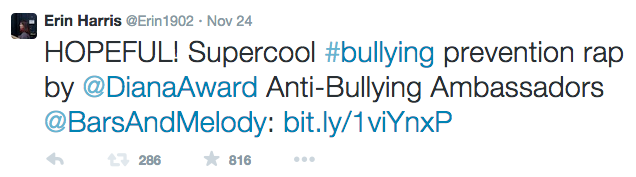
I @mentioned the Bars and Melody dudes in my tweet, and the tweet went wild among BAM fans. I got 156 retweets and 324 favorites in 52 minutes. As of now, a day later, that tweet has 262 retweets and 728 favorites. Plus I got 24 new followers. And counting….the notifications are still popping up. And, within five hours we got over 100 sessions on our post about the anti-bullying program, with 11-minute site visits, which is like a century in this era of rampant ADD.

Now I realize that that’s not superviral, but it’s pretty awesome.

And I realize that the teen fans and BAM-NOTICE-ME-PLEASE accounts are not our market. They’re probably not looking for behavior management training. They’re more centered on trying to get Leondre and Charlie to marry them. Which, when you see the video, you’ll admit is a righteous goal. But it’s still cool when anyone takes an interest in our content, because maybe—especially if the #Bambinos’ parents and teachers are teaching them about online conduct—their parents and teachers will come across our site and take an interest.

So here’s how to score hundreds of favorites and RTs:

Accidentally stumble upon something teen girls are crazy about. This sounds like mockery or sarcasm, but I’m not kidding. Girls love to like and share stuff. Imagine if there was an Internet in 1964 and you innocently @mentioned The Beatles.

Use a positive word in capital letters and also words like “Supercool.” I’m not positive that this is effective because I tried it again in a later tweet about this post and got nuttin’, but I suspect that a big happy word in capital letters followed by another positive word helped grab attention.

Screen Shot 2014-11-26 at 11.22.43 AM

This seems obvious, but…..@mention people. They and/or their friends, family, fans, and followers will pick it up and share it.

Just as you would with your personal accounts—even if your slant is serious and sensitive like ours—feature (where appropriate) fun stuff that you think is cool. Even if you don’t know if people will love it, or that they already do love it, share it if it’s fun and relevant.

So here’s the video. Awesome message these dudes convey. Great writing from Leondre, who was bullied. And cool video with all kinds of kids getting involved, and showing some pretty sweet dance moves too.

Now please like and share this post and you’ll be guaranteed 12,000 followers.

Top image copyright © Flickr user Brian. It’s a photo of a Life magazine cover from 1964…I trimmed it and disclaim all liabilities. Here’s the license. Thanks, Brian and RetroLand USA!

Posted in Content writing, Music, Web marketing, Writing | Tagged , | Leave a comment

Why I Hate the Present Tense Right Now

galileoI don’t actually hate the present tense in all instances or at all times. But there are two uses of it that often bug me.

1. On history shows. OK this one I do hate in all instances and at all times. It’s when you’re watching a show about astronomy and some scholar from Harvard says, “What Galileo does next is quite extraordinary. He believes that the earth revolves around the sun. He is convicted of heresy. He is subjected to house arrest. And there he makes some of his most significant discoveries.”

Unless one of his discoveries was how to travel in time, Galileo did not do those things as we speak. Talk of his heresy began in about 1616, and in about 1633 he went under house arrest, where he remained until he died in 1642. 2000-something minus 1600-something is about 400, so the Church was most unkind to Galileo in the past about 400 years ago.

2. In books. This second instance has more to do with where I am in my life, my reading, and my preferences right now, and could change. But at the same time, I have a history of finding the present tense cold in books, so maybe this won’t change. Time will tell, but the phenomenon struck home again recently when I was reading Under the Tuscan Sun.

I’ll start by saying that that book is written with exceptional beauty. Frances Mayes is an astounding poet. And though this sentence is written in the present tense, I drank it in again and again:

I sleep like one newly dead every night and dream deeply harmonious dreams of swimming along with the current in a clear green river, playing and at home in the water.

Every time I read that sentence I make a drooling sound like Homer Simpson daydreaming about donuts.

But.

Something about the consistent use of the present tense made me feel, as I read the first chapters of the book, that there was a disparity between the warm richness of poetic construction and what struck me as the cold clinicalness of the present tense.

One object of writing in the present tense is to convey immediacy—in-the-moment sensuality. I fall in love with Tuscany, I find a house, I buy the house, I renovate the house, I experience the food, the climate, the beauty, the history.

Yes!

But I’m thinking you found the house, you bought it, you renovated it, and to this day you experience the food, the climate, the beauty, the history.

Even magnificent descriptions don’t suspend my disbelief that the past is occurring in the present as I read.

And somehow, despite its immediacy, the present tense feels removed to me, or not quite right. “We walk through the hills and then we grill a steak for dinner.”

Specifically I think it’s the form of the verbs that bugs me. Say I’m in the act of washing the dishes. I might say “I’m washing the dishes.” But I wouldn’t say “I wash the dishes.” Say we’re taking a walk. I might say “We’re taking a walk.” But I wouldn’t say “We walk.”

Yes. That’s what it is. That’s what made me put Under the Tuscan Sun down for now. But I hope I can get over my problem with the present simple form someday, because that book is well worth reading for its descriptions, its sensuousness, and its reverence for beauty, history, and soul.

Margaret Atwood also sometimes writes in the present tense (I say “writes” because the world has the good fortune that Margaret Atwood is alive). And her books, too, can feel cold to me sometimes, probably for two reasons:

1. Her books are about deeply human things, and they illustrate that the human experience is not always kind. Take The Handmaid’s Tale. Offred uses the present tense to describe her life in the Commander’s house, reserving the past tense for memories and flashbacks.

Again, the present tense feels cold—or it felt cold to me when I read the book a long time ago. That said, the tone is necessarily cold because the story is intensely dark and dystopian. So there’s a function to the coldness, but I can’t say I like it—though I don’t think I’m supposed to, because what’s there to like about the totalitarian Republic of Gilead?

2. As a child Atwood accompanied her father, who was an entomologist, on research projects in the Canadian wilderness, studying insects. That might be another reason for sometimes-coldness: In their pursuit of facts, scientists often aim to be objective or detached. I don’t believe it’s particularly possible for humans to be very objective, but objectivity is an objective of the scientific method.

Like Mayes, Atwood is a wondrous poet, and when I think of poetry I always think of warmth and richness, though warmth and richness are by no means required elements of poetry. In some ways it seems surprising to me that poets (sensualists, aesthetes) would be at times frosty, but of course there are as many functions of poetry as there are emotions, experiences, individuals, and themes that require different tones.

Years ago a customer at a cafe I used to work at gave me a copy of Neal Stephenson’s Snow Crash. “You have to read this,” he said. “You will love it.”

So I started it, and I was immersed in action, and it was funny, and there was savory, wry social commentary, and everything going for it, but I still wasn’t 100% into it, so I put it down. Recently I picked it up again, and got further into it, but not super deep—and then I realized: This is written in the present tense. Is that what my problem is?

Now if any novel should be written in the present tense, it’s Snow Crash, because it’s movielike. It rockets into action instantly, and you feel like you’re in a movie. You feel like you’re surfing the ‘ment with YT. And it’s about virtual reality, so that present tense makes you feel like you’re in the Metaverse with Hiro Protagonist.

But once again I found myself not super into it, and I decided that even though the present tense felt right for the story, it was also kind of bugging me because I’m like the Princess and the Pea when it comes to the present tense. Or like Goldilocks when it comes to books in general at this time in my life: “This porridge is too cold; this porridge is too hot; this story for children about magic and 1950s innocence is juuuuuuuuuust right.”

There are exceptions for me. You’ll notice that I’ve used the present tense myself in this post from time to time. “You’re watching a show……” “Offred uses….” “It’s written……” etc. These uses read fine to my ear. What gets to me right now is an entire story or chapter told in the present tense. Sure, there’s value to the immediacy thing, but I’m much more—at this point—with you if you tell me a compelling story in the past tense. Maybe Half Magic, Great Expectations, I Capture the Castle, and Julia Child’s My Life in France happened in the past, but I experience the stories with the characters/people in my present as I read because the writing (and, somehow, the tense) draws me into the moment regardless of when the events actually occurred.

 Image from tonynetone.

Posted in Art, Books, Writing | Tagged | 3 Comments

Advice to Other Writers

Typing_Cat_by_Vickart

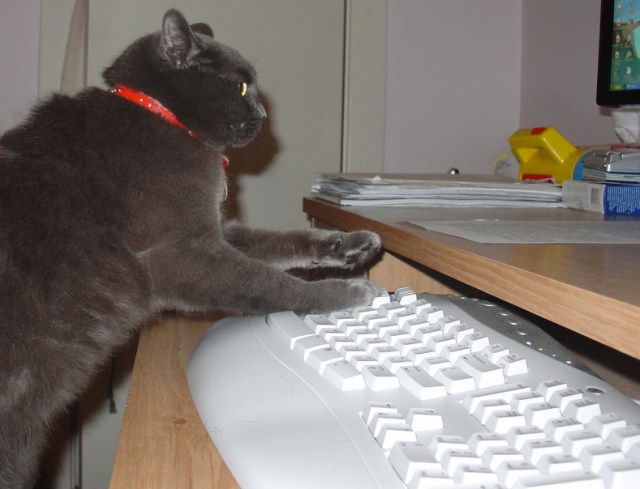
This guy is frantic not to freak his friend out. Or he’s horrified by her prose and violently pressing DELETE.

What do you say when a writer friend asks you to read their work and you don’t like it?

Recently I went to the Content Marketing World conference for work. There were a ton of great presentations, and one of the ones that gave me the most ideas was Gini Dietrich’s session on how to write blog posts that get read and shared. She mentioned that a good place to look when you need a blog topic is your outbox. What questions do people have that you answered via email that you can also answer in a post?

I thought about this a bit for work, but I don’t correspond with our customers or prospective customers that much. But her suggestion struck me as relevant to my personal writing. I thought immediately about a writer friend who wanted me to read one of his stories and give him some feedback.

It took me a long time to get back to my friend, because in all honesty, while I recognized his talent, I wasn’t crazy about the style of his story. He had to hound me for a reply, cuz for a couple weeks I really didn’t know what to say.

Then he said he could take it–whatever I thought–and I believed him because he himself will just tell shit like it is, which is why I’ve been so fond of him for two hundred years.

So finally I just said it. I responded to his email and said:

“OK….it’s taken me so long to get back to you cuz I keep trying to read it all but I get stuck cuz I don’t like the style.

“That don’t mean it sucks though. I’ve never been able to read James Joyce. I can’t stand Tolkien. I’ve tried those fuckin’ Lord of the Rings books 50 times and can’t get past page 5.”

Wait–I don’t like Tolkien???????? Anyone who’s read this up till here will likely click away right now. But here’s the thing: It’s just never been the right time for me to read Tolkien. (Actually I recently started The Hobbit again and am thoroughly charmed–I might reach page 6 tonight. I’ve always thought that at some point I’ll be ready.)

So anyway, then I told my friend that his story reminded me of a Terry Gilliam film, and I do like those. But as prose the story was just too chaotic for me. It wasn’t too wordy, as he feared, but it was random. I mean I got it cuz I know the guy, but at the same time the randomness shirked my concentration.

That said, I told my friend: DO NOT LET MY OPINION STOP YOU!!!!!!!!!!!!!

It can be dangerous to listen to other writers.

Or it can be helpful.

Or it can be both.

Example: I was once in a workshop with some dinguses who didn’t understand the first chapter of a novel I had slaved over. They didn’t like the narrator’s associative descriptions or her interior explorations and they couldn’t understand why I didn’t get straight to the action.

I called them the Twelve Tasteless Twats. Many of them hadn’t read much, and so had no conception of the kind of Great Literature I was writing.

So I wrote their opinions off.

Then in that same program I ended up working with an advisor who WAS well read and who DID know what he was talking about, and he also thought I needed to get straight to the action.

Initially I thought, ‘Yeah, totally, if I was writing a fucking Hollywood screenplay, you moron, but this is a literary work. Haven’t you ever read fucking Moby Dick or Remembrance of Things Past?”

Of course, the truth is that those books are hard to get through. Personally I love getting lost in the poetry of their prose. But, truth be told, it’s now been 10 years since I started reveling in the beauty of Melville and Proust, and I still haven’t finished their books.

At the time of this workshop experience I had been drooling over M&P for about three years, and, recognizing that as much as I loved those tomes, I was not ravenously blazing through the pages, I decided to experiment with getting straight to the action in my own novel.

And throughout the semester this exercise resulted in a series of action-packed, compelling opening chapters that everyone liked–even me.

But I also still liked the slow, stream-of-consciousness shit I had going in the first place.

So I blended the two styles. The novel now starts out with action: The narrator and her twin sister are drinking heavily at a bar with the twin sister’s husband and the narrator’s friend and BAM! the twin sister’s husband has some words with the twin sister and they both disappear and BAM! next scene he’s dead in the back room with a needle in his arm and…..was it an overdose or was it murder? That needle was stabbed into his arm like a knife. And Phil had already taken a lot of pills that night and had been carefully managing his drug addiction for years and wouldn’t ordinarily have popped pills and shot up on the same night.

And then, later, the lyrical, meditative stuff comes in as the narrator is disentangling herself from the police’s investigation of her sister and as she’s reflecting on her childhood and thinking about her relationship with her possibly evil twin…..and she goes to Vermont to handle the estate of a great aunt who has just died, and to process her grief over her aunt and her brother-in-law and her sister.

So the feedback of the Twelve Tasteless Twats and the Hollywood-minded professor brought on the action-packed beginning, but I needed to keep the reflective stuff too because it fit with the narrator’s emotional state as she worked out some family stuff.

So, I told my friend last year, listen a little to my opinion of your work, but also don’t take too seriously the opinion of some dumb fuck who doesn’t totally get what you’re going after in your writing.

“You have a talent for using language interestingly and telling a story,” I said. “Make some tweaks if you want–maybe experiment with making it less chaotic to suit my taste, but also keep writing your shit the way you want to cuz that’s your style, and I just might not have any freaking taste.”

One of my favorite film directors ever on the earth is Francois Truffaut, who said, somewhere, something like “Taste is the result of a thousand dislikes.”

Sounds like Truffaut’s taste was impeccable, right?

Like me, like many people, his taste was discerning.

“This is ugly…that is poor quality…..this is too self-conscious….that is too phony…….THIS is beautiful and it strikes me because it’s rare.”

Of course, there’s also the adorable interview with another of my favorite directors, Claude Chabrol, Truffaut’s friend and fellow New Wave director, and in that interview Chabrol says that it was “touching” when Truffaut, who came from nothing, became moneyed and went through a phase of zipping around Paris in a convertible. The implication is that Truffaut’s tacky nouvelle riche convertible was not so tasteful.

So maybe taste is not necessarily the result of a thousand dislikes. Maybe taste is just a result of taste. You like what you like. You drive what you drive. And you write what you write. Let it be true to who you are, and don’t care too much about what other people–especially other writers–think–even people or writers whose taste and opinions you admire. There are people who think that driving an expensive car to show that you can finally afford it is not tacky. There are people who think that meandering, undulating, reflective prose is beautiful. There are people who think that jumpy, random prose that goes back and forth in time with no pattern is interesting. And somewhere in the world is your audience and your market.

So I told my friend to have people who aren’t tasteless twats give his story a read. “If someone who digs it reads it, they might have feedback on how to make it even better,” I said.

He took this all well. He respected my feedback, wasn’t in the least offended, and said, “I think I know what you mean about it jumping all over the place. My point being that when I use parentheses it’s either to back up a setting, character development, or memory daydream. I really feel I need to use them because I personally dislike it when things aren’t described. Like I need to build things up so things or people are real, not out of place or uncharacteristic.”

He knew what the fuck he was doing. He knew how he wanted to tell his story. I haven’t talked to him in awhile so I don’t know for sure, but I’m guessing that he’s still telling his stories the way he wants to tell them because he knows that while feedback can be helpful, and while his writing is good but I don’t care for his style, the best way for his writing to be meaningful is if he writes what he wants to write the way he wants to write it.

***

Actually that feels like a bit of a cop out. There is shitty writing that no one would want to read.

There’s a lot of it.

But if you have talent like my friend, what one or 12 tasteless twats think about your style shouldn’t stop you from retaining your style and writing in a way that’s meaningful for you.

Image generously stolen from vickart.

Posted in Writing | Tagged , | 2 Comments

5 Quick Tips for Overcoming Writer’s Block

ba_1_b_3954_1Recently I got a comment on this blog that was complete spam, but buried within the spaminess of the comment was a good question (albeit a longwinded question):

I was interested to know how you center yourself and clear your thoughts prior to writing. I have had trouble clearing my thoughts in getting my ideas out. I truly do enjoy writing but it just seems like the first 10 to 15 minutes are generally lost just trying to figure out how to begin. Any recommendations or tips? 

Not bad! I actually left that comment up for awhile and was going to respond to it, until an Adwords certified friend recommended I delete it . . . because it was spam. So I deleted it, but I’ll answer the question here because it’s a good one.

In some ways, I’m the wrong writer to answer this question because I actually advocate the art of procrastination. In other ways, I’m a good person to answer this question because I write professionally, and therefore, by necessity, prolifically. So here’s what I do when I’m getting started on writing something–whether it’s fiction or nonfiction.

1. Write other shit to warm up. When I sit down to write, the last thing my brain wants to do is the thing I’m trying to do. So I get myself in pen-to-paper or thoughts-to-keyboard mode by first writing something else. I might write a letter in longhand, type an email, comment on another blog, compose a tweet, post something ridiculous on Facebook, or IM with similarly word-minded friends, of which I’m fortunate to have several. Here’s one such esteemed personage and another and another.

2. Draft complete crap. Write to just get it all out, knowing that you’ll refine your thoughts later. Anne Lamott calls these early efforts “shitty first drafts.” While they’re not often well organized, they typically feature at least a few good turns of phrase, and exactly what you need to springboard off of into the lake of fine prose.

3. Smoke a lot. I often do this at home, but I don’t do it at work, as it’s not allowed. But just as alcohol and writing have a deep history, cigarettes and writing marry like PB&J, as you can see in the photo above.

Actually, don’t smoke while writing, and don’t smoke at all. It’s bad for your health. And personally, I write more at work, not smoking, than I do at home, smoking.

4. Scratch distractions. Chuck your phone, put on some headphones and listen to music without lyrics, and let the people around you know not to disturb you. For some, this is just a matter of saying “Hey, I’m writing now, so please leave me alone for awhile.” For others, this involves waking up earlier or staying up later than their housemates, or writing when their housemates are out. Whatever works, but it’s pretty fair to say that once you’ve got your springboard from Step 2, it’s actually hard not to dive into the lake of your work because the momentum is finally there.

5. Do unto your writing as Hemingway did unto his. To be honest, I haven’t yet (though maybe I one day will) come across a Hemingway novel that has blown my mind, but I love that great book about his life in Paris, A Moveable Feast. In it he says “stop when you are going good and when you know what will happen next. If you do that every day . . .  you will never be stuck.”

This tip works for me with my work writing, though I have to admit that it was over two years ago that I stopped when I was “going good” with The House on the Lake and when I knew what would happen next. But, that said, my particular fiction dilemma ties into my feelings about productive procrastination: many things have come up in the last two years and so I’ve been dealing with them, while waiting for the kairos for THOTL.

Generally, these strategies usually often sometimes work for me–at least at work, where I write for 8+ hours a day. I can’t, however, these days, attest to these tips working super well at home. So for that maybe I’ll try author Brian Moreland’s Step #7.

Let me know what works for you!

Posted in Art, Books, Writing | Tagged , , | 1 Comment

The Ghost in My Hotel Room Part 2

4288_86860708197_1713278_nWhen I decided to come to Rye I didn’t foresee that it would take twelve hours to travel less than three hundred miles. I didn’t envision arriving near midnight. Perhaps it would have been more sensible to stay in London near Victoria station, where I had to get the train to Gatwick in two days, but I had decided to chill down in a quiet medieval town, as I’d done in Chartres and Bern at the ends of my trips to France and Switzerland. In England, I had been staying with friends in London and Yorkshire, and this was my chance to end my trip on a solitary, reflective note. Presently I was in Rye, exhausted, starving, freezing, and dripping snot. It would be loud and obnoxious to clatter uptown, but I had no choice. I pulled my suitcase behind me and the wheels clacked on the cobblestones like echoing hooves.

It was quite comical, the racket, and I laughed to myself all the way up to the High Street. There I found a delivery guy who said the Mermaid was off the bend of the Mint–whatever that meant. He said I should turn left straight on “by the blue car,” then right on the next street. It was unclear which blue car he meant, and unclear where the side street was, but I failed to clarify his directions because I was tired and he seemed weird. So I approached false alarm after false alarm, alcoves that resembled crossings and turned out to be houses set further back from the street than others.

My suitcase and I clacked on.

Finally I came to Mermaid Street and induced that it would be a likely spot for the Mermaid Inn. I turned left and noted another hill. I was hot from exertion, but my hands and face were frozen from the cold air. My legs were getting weak as I maneuvered my suitcase up a narrow sidewalk—too narrow, really, for the suitcase.

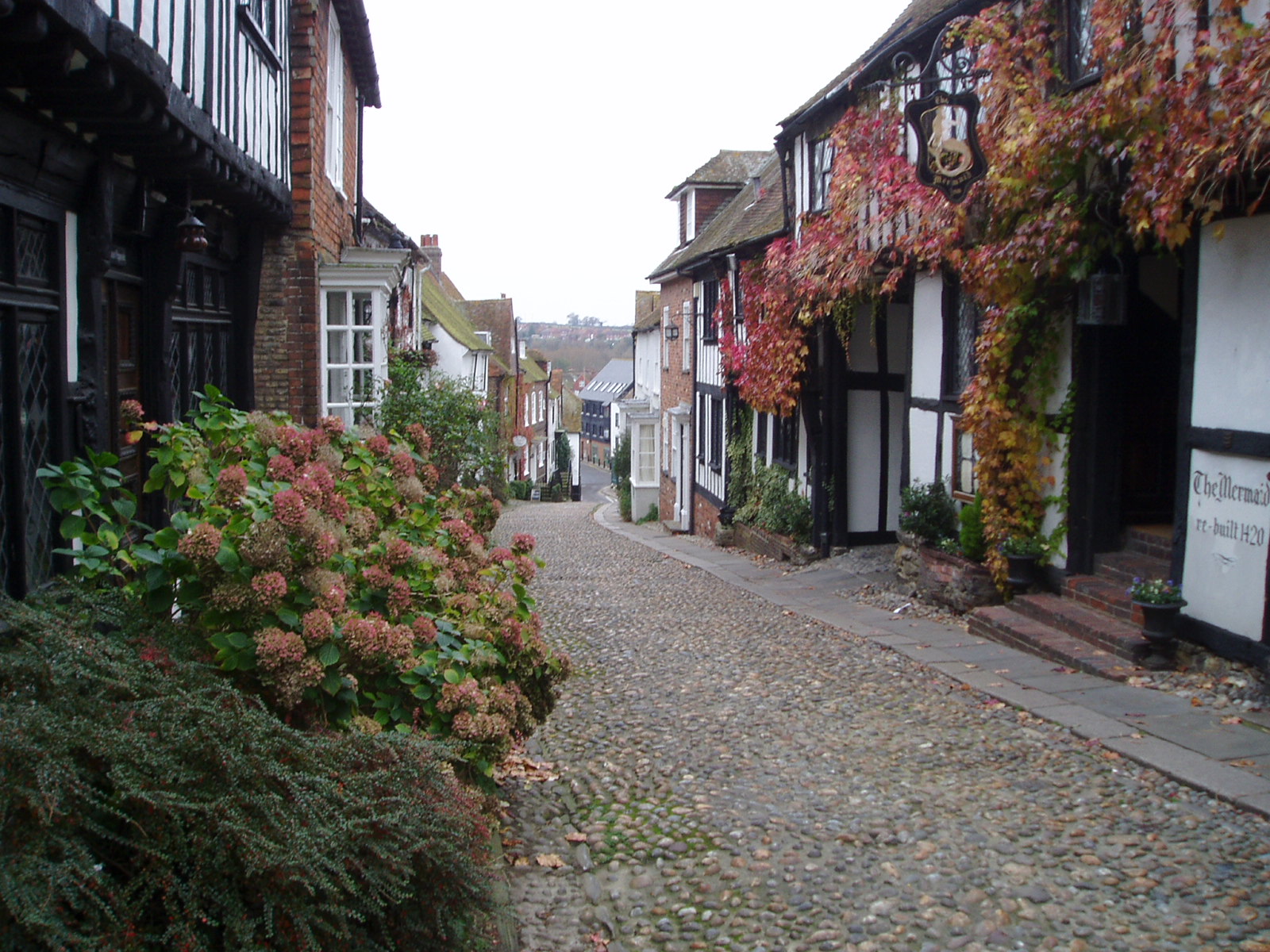
I veered into the street, laughing at the volume of my noise, the decibel of my midnight arrival in a quiet town off-season on a Sunday. The stones were inherently uneven and kept trying to trip me as I zigzagged through what looked like the easiest path for suitcase wheels. I stopped for breath, looking up at where Mermaid Street met West Street, catching wind of cool air and enveloping atmosphere, everything so old and so quiet. For a moment, as I stood there in the darkness and the beauty, the town was mine. Then I turned and saw that the building I stood in front of was the Mermaid.

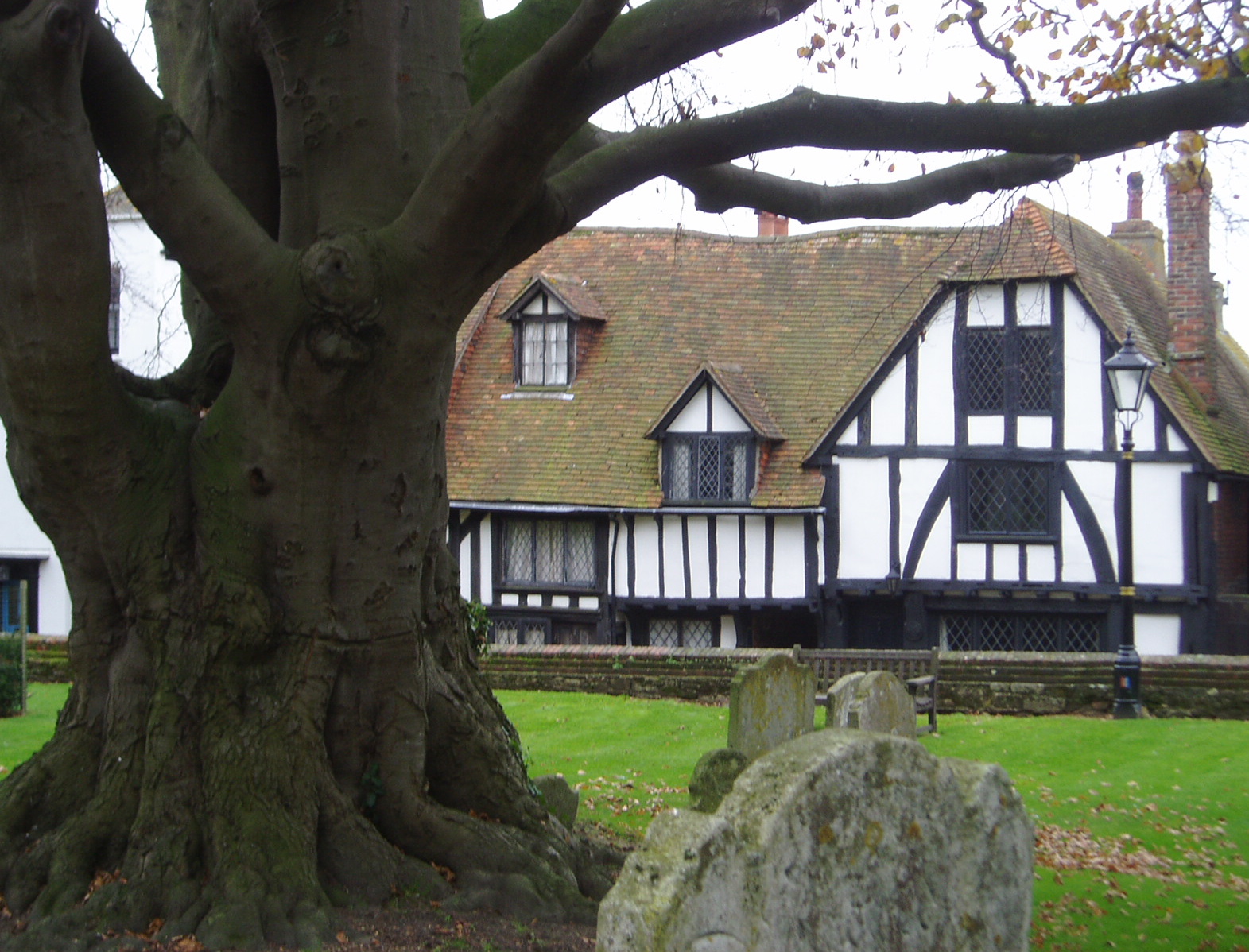
mermaid inn

Mermaid Street by day

Inside, they must have thought I was drunk. I leaned on the counter, wiped my red nose with a tattered Kleenex, and mumbled exchanges through frozen lips set like stone between numbed cheeks.

I was reminded that there was a porter, and I savored a sense of relief as he carried my suitcase up a short, narrow flight of stairs, another short, narrow flight of stairs, and then to the right toward a doorway that led to a trio of rooms that may at one time have been one room. Even an active imagination can’t conceive of how much must have been and changed in the 900 years of the hotel’s operation. (The original edifice dates from the twelfth century; the modern Mermaid was rebuilt after a fire in 1420.)

The porter was a mild-mannered fellow, soft-spoken and reticent. He reminded me of the bus driver, with his long, ambiguous pauses, who stopped at phantom stops to let people on who weren’t there. And he reminded me of the innkeeper in the film The Woman in Black, who speaks little, except to ask Arthur Kipps, who arrives late at night, “ave you et?”

He seemed to have inhabited the Mermaid since its inception, so I asked him about the resident ghosts (the reason I had chosen the Mermaid). Had he seen them? Where did they appear?

His answer was slow in coming, then languid and elusive.

“There’s no way to tell,” he said, “what they are. They’re just a mist-like.”

“What do they do?” I asked.

Slowly, he pointed behind me, toward the landing, dark but for the glow of a painting of the Virgin Queen bearing a white ruff and a stony expression.

“Make odd noises–strange sounds you can’t make out.”

This seemed silly, just a vague story to intrigue tourists. Of course I was captivated, but I also chuckled to myself, because what building this old wouldn’t be subject to random noises?

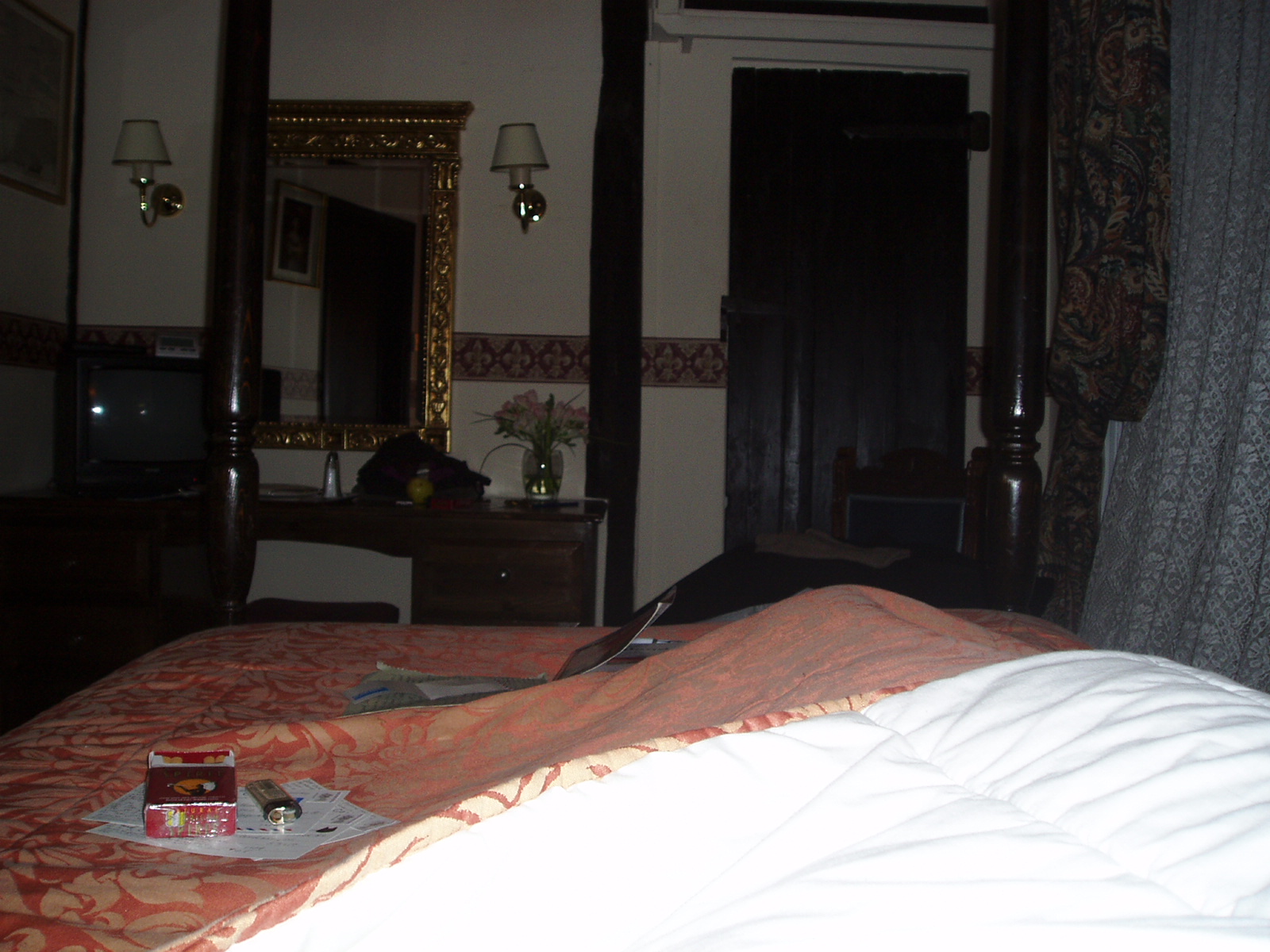
The porter opened the door to my room. The door was thick, made of uneven planks, and fixed to the jam with heavy iron brackets. The room was warm and pleasant with a four-poster bed and a beamed ceiling. The windows were mullioned; there was a little door on one wall that connected to the adjoining room. The bathroom was modern for a British one, but the bones of the room were medieval. Two floors above the atmospheric street I admired when I stopped for breath, it gave me a feeling of warmth and security, a feeling of toasty comfort I haven’t felt since I lived in my sloped-ceilinged bedroom in high school, a room that looked over the street and my neighborhood from a level that made me feel insulated.

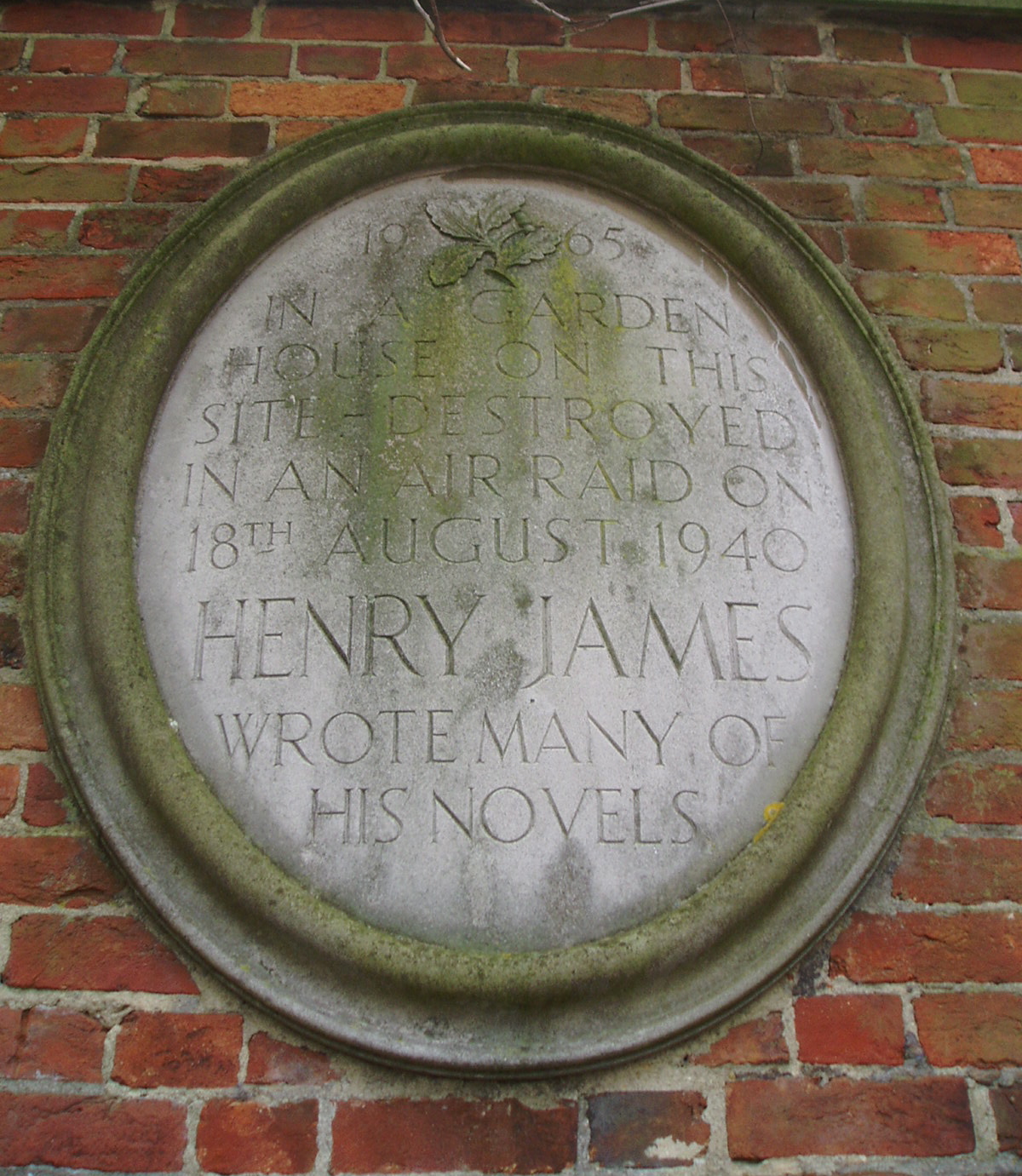
OLYMPUS DIGITAL CAMERAI got into my nightclothes and lounged on the bed, reading through the touristy crap considerate hotels compile for travelers. I learned that the aforementioned monarch stayed at the Mermaid in 1573. Henry James’s house, which I had come to see, was around the corner. I could get beer and cheese delivered to my room at any time. This was enticing, but I was more tired than hungry. I was weary and glad to have the next day to spend quietly. Aside from this, I didn’t know why I had come to Rye. It didn’t have a cathedral like Chartres or Winchester, but it had a pull, and I sank into the tiny twin mattress with the hope of finding it the next day.

***

It was quiet, and I was nearly asleep, tucked under a quilt with an oddly comforting smell of dust, when I became aware of a presence behind me, standing over my bed. It was tall and male.

I sometimes have these feelings–impressions–of spirits, and am not often sure if they’re real. But this was something that seemed to have observed me and then stood next to my bed as I was about to sleep.

I lay still and considered it. It chilled me that it had waited till I was nearly asleep, but I didn’t have a bad feeling, though I was afraid.

I often have the feeling, in these situations, that if I moved deeper into the experience, if I moved beyond the threshold of caution, if I really wanted answers—who these people are, what they want, why they reach out to me—I could find out, and they would appear in fuller form.

There was a time in Chartres when the ghost from a novel I was writing at the time would have appeared to me if I had allowed her to. But then, as now, I exuded a strong objection. This was not the time.

I tend to ignore presences, to consider them only vaguely, to shut my mind from deeper consideration, to concentrate on other things that occupy my mind at these times. I think these presences are related to my writing, drawn by the creative spirit, attracted to my fiction. I think they can help, or have something to offer, but I’m not ready to be receptive. I think these presences are related to the writing of my ghostly novels, but for now I ignore them. And I’ve been fortunate, in not being ready, that they are mild and not forceful, and seem to respect the kairos, or what I view as the right time, whenever that might be.

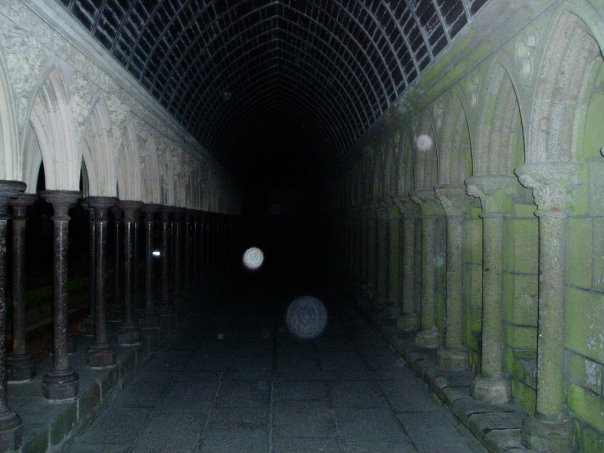
OLYMPUS DIGITAL CAMERASo I lay quiet in Rye, unmolested, but not unafraid—it could never be said that these things don’t chill my blood. I concentrated on a ring of white light surrounding my body, visualized it circulating, threading around me as I followed its course with closed eyes. And I concentrated on how these experiences are more for my fiction than for me, though these two things are the same.

Eventually I worked up the nerve to turn the lamp on. I could feel that the presence was still there, standing, watching, waiting (for what?), but it was dimmer. I reached for my notebook and wrote as though I were being observed by an animal that could communicate intuitively but would be unlikely to speak.

I wrote about why unknown things should desire to approach you at your bed. One reason is that in sleep the unconscious moves away from logic. This makes sense particularly if apparitions are projections of the self. Was there really a presence next to my bed, or was my creative unconscious just excited by exhaustion, and now rest, not to mention gothic tales, being around the corner from the house of the author of The Turn of the Screw, and in the mind of my own novel?

The presence diminished further, became more distant, as I wrote. I then scratched a poem down quickly–good in some ways, trite in others . . . suffice to say I wrote a poem (poems don’t often come to me anymore), and I understood then why Henry James lived in Rye.

Once I had written for a bit, I felt I could sleep. I left my notebook and pen within reach and turned off the light.

It was quiet for a while. I drifted and neared sleep again.

Then the noises began.

Odd sounds, like someone tapping on a pipe with a tiny hammer. I kept thinking, as I thought on the threshold, that it would have been unnatural not to hear random noises in a place so old.

But the tapping was intermittent, irregular. There was no steadiness, no predictability to it, no rhythm; it was sporadic and alarming and strange. Logic kicked in and I decided it was a radiator clinking. My radiator was off, but it could have come from another room.

Or maybe it was a plumbing pipe.

It was under the floor.

Every tap came from a different part of the floor.

It moved around under my bed. It wasn’t there before, and now it was jumping around without pattern, tapping without rhythm, each tap getting louder and echoing like a small dull drum.

I searched the darkness for reason and wished vehemently for it to stop. I reached for my notebook and wrote in the dark. Just stop and let me sleep. I’m not going to talk to you. Just stop and let me sleep. I’ll write, but I won’t talk to you.

It stopped.

I closed my eyes.

Moments passed, and I counted them.

Then it started again, intermittent tapping, chilling, bizarre, thundering in the surrounding silence.

But I was too tired for games. I closed my eyes and slept.

Posted in Ghosts, Travel, Writing | Tagged , , , | Leave a comment

The Ghost in My Hotel Room Part I

OLYMPUS DIGITAL CAMERA

I had been traversing the small island from Yorkshire to Sussex for eleven hours. I was now in Ashford, the last leg of my journey to Rye, and the train was down. Notice boards promised compensatory bus service to Rye, but there was no indication of from where, in or around the empty rail station, the bus would depart.

This worried me. It was close to eleven and I feared that my hotel would close before I arrived. It was off-season, it was November, and I was anxious that all of Rye would be shut and I’d have to make a midnight journey back to London.

After a lengthy episode involving a wrong number erroneously cited in my Lonely Planet guide, I managed get a ring through to the Mermaid. Fortunately they were still up, and I was told they even had a porter, which was impressive because I was tired of dragging my suitcase around the country. I had gotten used to leaving its burden with friends while taking mini-trips with a considerably less cumbersome backpack.

Relieved, I hung up and started looking for clues about the veiled bus. A woman approached and asked in a German accent where the bus to Hastings would arrive. This was my bus, which was supposed to stop in Rye and terminate at Hastings.

Together we dragged our suitcases around the entry and perused posters and timetables, all with times for trains, none with information about busses.

We went outside. There were one or two cabs around, no drivers inside, and no signs of life.

We trailed back inside and around the terminal. We stood at the foot of the stairs that led up to the platforms, contemplating the advantages of hauling our suitcases up the steps. I was drained—eleven hours of traveling—and my German friend had been laid over the previous night in Brussels, and had spent all of that day flying to various cities in the hope of eventually getting to Hastings. She said her name was Hilda, and then she turned around and noticed an elevator behind us. We rode up and asked the three people who were waiting for trains about the bus. They knew nothing.

Next we scoured the platforms for an official. We found no one, and, not expecting the bus to slide in on train tracks, we went back downstairs and outside, scanning the vacant station for one knowledgeable soul.

Hilda spotted a man sitting up in the backseat of a cab—he’d apparently been prostrate.  She ran over and knocked on his window. She spoke with him briefly, and the instant she turned back, shaking her head, a bus pulled in to the drive-up and stopped. It was marked Hastings, so we got on.

I pulled myself and my suitcase up what I hoped would be the last set of stairs for the evening. I dropped into the first seat and hauled my suitcase up onto the seat next to me like a heavy, spineless companion. It was too fat to fit on the floor between the seats.

Hilda plopped behind me, her suitcase her seatmate, and asked me what I was doing in Hastings. I told her my plans for Rye—that it was supposed to be a lovely town and I was going to wind down there before returning to the States. She thought it was odd—women don’t usually travel alone on holiday. She was not on holiday; she was staying with a family in Hastings to “learn English.” I thought this was odd. Her English was substantial—we certainly hadn’t been communicating in my spotless German—and I enjoyed her reserve. She was versed in the art of understatement. She would get on well in England.

The driver had the air of a man with another job. I had the impression he’d been working all day, I guessed on the trains, and had perhaps an hour at home with his family or to sleep before he had to start second duty. He yawned as he poured tea from a thermos into a plastic cup and stirred in milk from a tin. He was well prepared: Either he was meticulous in his rituals or he had a conscientious wife.

I asked him, “About half an hour to Rye?”

His expression didn’t change and I wondered if he heard me. He sipped his tea and stared out the window.

Finally, after several long moments, he murmured, “I reckon about that.”

Three more passengers boarded, and then the driver closed the door and started the engine. My suitcase swayed into my lap as we wound around roundabouts toward the motorway.

I had full view of everything: The empty road, the wayside trees, the driver, the passengers–the latter two reflected in the windshield by dim aisle lights. Faces were superimposed over the road as we exited the motorway and turned onto a narrow, winding lane. The passage was dark, lined with stone fences. Sheep slept close to the stones, their closed eyes and somnolent faces illuminated by our headlights. For a stretch, tall beeches loomed like pale specters in an arch over the road.

Slowly we crept into a slumbering town, its shops unlit, its houses dark, smoke puffing from their chimneys. I asked the driver, “Is this Rye?”

He gave no indication of having heard me. He was consulting a map, which he held in his left hand. He raised his eyes to the road and dropped them back to the map. He steered cautiously.

Finally, after several long moments, he murmured “no” benevolently, as if to compensate for his strange pause.

We coasted through town and rolled through countryside, past stone cottages and more sheep, slowing when an approaching car neared to squeeze through the tiny lane. It was difficult to see: In spite of the clearness of the night, little was visible on the dark road.

Suddenly we slowed and stopped next to a solitary gate. This gate was closed. Behind it was blackness; before it was nothing. But the driver opened the bus door and waited.

I knew this couldn’t be Rye—Rye would have shops and houses and cobbled streets and half-timbered buildings. This was a vacant gateway, a darkened portico. Had there been a fog, it might have spread in through the door like the vibration of this queer pause. But the door opened to nothing—no one got in and no one got out. We just stood stopped for several minutes. Then, abruptly, the driver closed the door and plowed on, taking the bus to the very top of each gear before shifting, so that it lurched as we pressed on down the dark road.

Eventually we approached another town—shops with bright signs hanging from old brick facades, inns and pubs in stone buildings steeped in soul. We wound round a curve and stopped in front of a small rail station. I wished Hilda well, thanked the driver, and maneuvered my suitcase down the stairs, into the dark and vacant town.

I had few coins for a cab, but it didn’t matter. The streets were empty; there were no cabs. I pulled out my guidebook and consulted its token map of Rye. The Mermaid was uptown, straight ahead and then toward the right. The direction was clear, but it was impossible to estimate the distance.

–           –

Posted in Art, Ghosts, Travel, Writing | Tagged , | Leave a comment

The target=”_blank” Debate

I work as a writer in a marketing department. Sometimes I post my web content on our blogs on our main site, sometimes I post my content on an external blog, and sometimes I pass copy over to other people to post on our main site.

Whenever I set pages up myself, I always set external links to open in new windows/tabs.

I do this because when I’m surfing other people’s sites, my experience is that most web content is either badly written or too much for me to take in or not exactly what I’m looking for. So I want new tabs so I can glance at the content and probably click away, and then the useful page that actually interests me is still open. This way I don’t have to back-browse through all that useless content and all those annoying pop-ups getting in the way of my pursuit of useful information again. (UX Movement has a nice section on back-button fatigue.)

Our social media specialist is of the same mind, and also targets off-site links to open in new windows/tabs.

But our web guy disagrees.

This came up because some funky target=”_blank” code made its way from our off-site blog into a Word file and from there into an eNewsletter.

I agree that links from emails don’t need to open in new windows because the user always has the email to go back to for navigation. It’s just when I’m on a website that I want to stay on that I want new tabs for links–so I don’t lose that website in the maze of 20% useful content and 80% garbage that is the World Wide Web.

I’m very firm about that preference generally–particularly on The House on the Lake because I don’t want the seven people who read that serialized ghost story to go offsite and wander away. (Actually, I don’t think I have any external links on that site at all–a devious ploy with the aim of preventing reader distraction–and it should be noted that that brilliance is the result of a valued suggestion from our cherished web fellow.)

That said, on a blog like this, where my main focus is to drive visitors to The House on the Lake, I won’t necessarily target a new window for an off-site link. Like click that House on the Lake link above, and see if you make your way back here. You might if you’re interested in my writing about writing; you might not if you’re more interested in eerie tales of the ghostly and macabre, and I’m OK with your decision either way. (But never click away from The House on the Lake unless you’re going over to Twitter to tweet about it–I want publishers to discover that site and my writing and pay me money to write for them.)

So our web cat contends that “target blank = usability no-no” and sent us a bunch of crap from the head dude at Smashing Magazine that says one way to avoid a “usability nightmare” is to ensure that all “your links open in the same window” because “Visitors want to have control over everything what happens in their browser. If they’d like to open a link in a new window they will. If they don’t want to, they won’t. If your links open in a new window you make the decision which is not your decision to make.”

My response to the above was that there are a lot of grammatical problems in that statement—and coherence should be #1 to the UX.

But I was just messin with our web cat. I get what he and the Smashing dude are saying and respect their points.

Then in retaliation our web cat sent a bit from his go-to UX expert Jakob Nielson (from 1999, BTW) that says “Opening up new browser windows is like a vacuum cleaner sales person who starts a visit by emptying an ash tray on the customer’s carpet. Don’t pollute my screen with any more windows, thanks (particularly since current operating systems have miserable window management). If I want a new window, I will open it myself!”

Pretty decent argument there too, backed by usability studies, apparently, conducted in 1999, I believe, and I get the idea of not pushing your own preference on your users. Though I could say that if you don’t open links in new tabs for me, you’re dumping your ashes on my carpet.

But if research backs you up and I’m in the minority, you might be in alignment with best practices.

On the other hand, if, as Michael Fienen says, “designers/coders should not be making decisions for the user as to how a page opens,” should they be making decisions for users about which pages open at all? Maybe there should be no links on the internet. The user can determine if something interests him, and then go to Google and do a search.

JKJKJKJK.

Cuz I’m not sure that there would be a Google in that no-links world.

Really, Fienen makes a good point: “If you feel like you need to force a user to stay on your site for some reason, maybe you need to look at what’s wrong with your site that makes it a destination that isn’t compelling enough to attract and retain visitors on its own.”

But consider this example of how you could have compelling content and still lose me:

I’m looking for training for my staff. I get to your training org site and think, “Yeah, they link to decent content, but what I’m looking for is TRAINING. Well, maybe I’ll go over to this government link real quick and figure out if I have time to apply for a grant, though in the meantime I have this budget from XYZ to use, so I should get away from this .gov site and back to the training org site to sign my staff up for training. But that training org didn’t give me any new tabs, so I’ve clicked away from their site and into a convoluted web of governmental bullshit. I have no time to dig that org site back up due to this ridiculous meeting I have to get to in three minutes, and I’ve cleared my history because I was also doing unprofessional searches simultaneously.”

Weeks pass and I don’t remember your web address or the name of your training company, though I could dig it up from a Google search or one of your markety emails in my trash folder, but now my bosses have cracked down on my spending and my funding has dried up.

But most UX experts say don’t dictate what happens in someone’s browser. The arguments for that stance are plentiful, and they lead the way across the web.

With the advent of tabs, however, sites like Webvanta say that “the arguments against target="_blank" are weakened; somehow a new tab feel like less of an imposition than a new browser window.”

Indeed, this forum on SEOmoz.com features the comments of two SEO specialists who also prefer new tabs for off-site links. One of them notes that target blanks “is especially important . . . when the destination they’re going to off-site breaks browser native ‘back’ buttons, where even if you want to go back to the site you came from, you can’t.”

And if you’re like me, you know how annoying it is to wrangle your way back to a site that you intended to stay on.

What do you say? Mac or PC? Coffee or tea? Cats or dogs? Target blank or same-tab?

I went Mac/tea/dogs/same-tab in this post, because they all have their place and they’re all worth engaging on occasion–and to see how much same-tab would annoy me when I go back to read this post and check the links.

But I like PCs/coffee/cats/target blanks a little better. They have their drawbacks too, and whether I favor them in my personal writing depends on my mood . . . but more on my purpose. If I got you to click over to The House on the Lake at all I’m happy. Though if this site was my livelihood, I might want you to shoot back over here.

Posted in Content writing, Editing, Web marketing, Writing | Tagged | Leave a comment