Does Burger Burnout Apply to Writing?

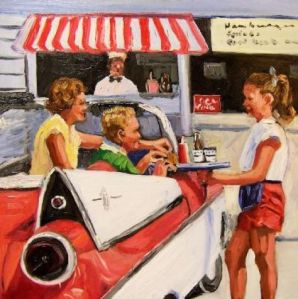
For a while when I was in high school, I was a sundae slinger at a burger-and-custard joint that had been a landmark establishment in my midsized Midwestern town since, I believe, the 1940s.

As a small child in the 80s in the company of family and friends, I enjoyed burgers and custard at Pig ‘n Whistle, but as an employed teen in the 90s with free food at hand, I rarely partook in the delectable offerings of the delicious drive-in car-hop that partially inspired Happy Days.

What came over me? Why would a teenager pass up creamy custard and buttery burgers? Maybe it was because I smelled the grease too much on Friday- and Saturday-night shifts, or because I was too busy planning on drinking OE 800 at the park after we closed, or because I dropped too many 30-pound stainless-steel cylinders of custard freshly hauled from the vat onto my toe. Whatever the case, I always boiled it down to overexposure–I burned out on the delights I served up to others for $4.25 an hour. I was around burgers and custard all the time, so I simply had no interest in them.

Later I worked at a Big Boy and never ate there; I never had my clothes dry cleaned when I worked at a dry cleaner (not that I would have otherwise); I never ate the free pies as an employee of Baker’s Square. Those taste like chemicals and 74 ingredients anyway, but the reason I figured that out is burnout. Overexposure. You know how easy it is to take the piss out of the shit you do for a living.

When I started freelance editing a ton, I burned out on that. I remained capable of tweaking pseudoacademic drivel and cutsey crafty fluff, but I got overexposed. Burnt out. “Other people’s shit,” I called the stuff I edited. And because I scrutinized words and grammar and syntax with an editorial microscope pretty much eight days a week, I really didn’t read for pleasure for about two years. My eyes were burnt out. My brain was overexposed.

So when I moved from proofreading to copywriting at my day job I was somewhat concerned that my pleasure writing would suffer.

But I’m finding that quite the opposite is the case. I’m a copy machine all day, cranking out PPC landing pages and text ads and industry news and promo emails (and also editing other people’s quality writing), and then I come home and keep writing. The more I write, the more I write. Words flow from my fingers. It’s true what they say in writing circles: Write every day. Because when you do, your shit flows better. Thus The House on the Lake has not suffered–because I’ll never burn out on writing.

And here’s why. Somewhere between the custard slinging and the freelance editing, I worked at a cafe where we made spectacular food. We crafted herbed almond mayonnaise, olive spread, zucchini bread, chili, hummus, tahini, Thai peanut soup . . . the list is endless . . . and then we ate the food we made (and served) because it was good.

Not that burgers and custard aren’t good–they’re heaven–but the food we made at Brewed was nourishing, and in this age of dwindling quality, you can’t burn out on something that’s ace. In this vein, writing copy for a quality company that aims to help people is inspiring, and writing copy all day is addictive, so it fuels me rather than drains me. Burger burnout need not apply to my writing enterprise.
Posted in Content writing, Editing, Writing | Tagged | 1 Comment

Productive Procrastination

Courtesy Becky B.

One of a writer’s duties is procrastination. It’s a law of the vocation. I’ve never heard of or known a writer who wasn’t a master at devising ways to delay the act of crafting prose.

I had a professor once who warned me about the dangers of procrastination. He said it was a tempting but malignant fruit; he said it was addictive; he said it could kill creativity. He urged me to write voraciously, to write religiously, to write as if it were as reflexive and vital as breathing. He was right, of course–when the passion for crafting sentences and stories swims in your blood, you should do nothing but strive to get the words on paper or on screen.

But I have long thought–and Tom would tease that this is just an excuse, but he would partly agree–that sometimes you put something off because it isn’t quite the time to do the thing. Sometimes procrastination has a function in that it allows you to wait for the right time to get to the right thing. There’s a word for this: kairos. I came across it in a volume of Carl Jung’s letters. Jung prefaced a delinquent response to a correspondent with an apology, saying, “I always have to wait for the kairos, the right moment of time, when I am able to give a profound reply.”

Therefore it was Jung’s duty to procrastinate. And the key to waiting for the kairos, I’m sure he said somewhere–and Tom would agree–is seizing it when it comes.

I have always been desperate to write. Since I could fashion the shapes of letters with a pencil, I have been compelled to express myself with composition. Playing with words in poems, jingles, essays, emails, texts, instant messages, Facebook posts, blogs I ghostwrite, blogs I openly write, letters I mail, notes I leave, stories I type . . . is as natural as rain.

But sometimes I’m supposed to be working on one thing–chapter eight of The House on the Lake, for example–and I can’t get myself to “go to the table,” as Tom called the act of sitting down and getting done what you gotta get done. I can’t go to the table because I’m waiting for the kairos.

Often, while I’m waiting, I’ll prioritize some other deadline–partly out of devotion to my other obligations; mainly to avoid doing what I believe I was born to do. Frequently I’ll accept a freelance editing project and exhaust myself by working on someone else’s words for an entire weekend following a forty-hour work week.

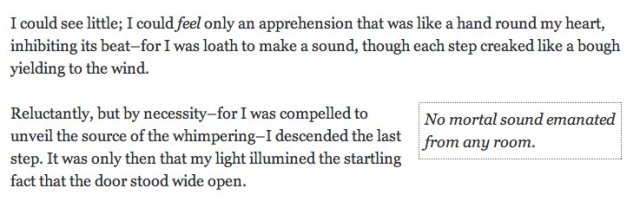
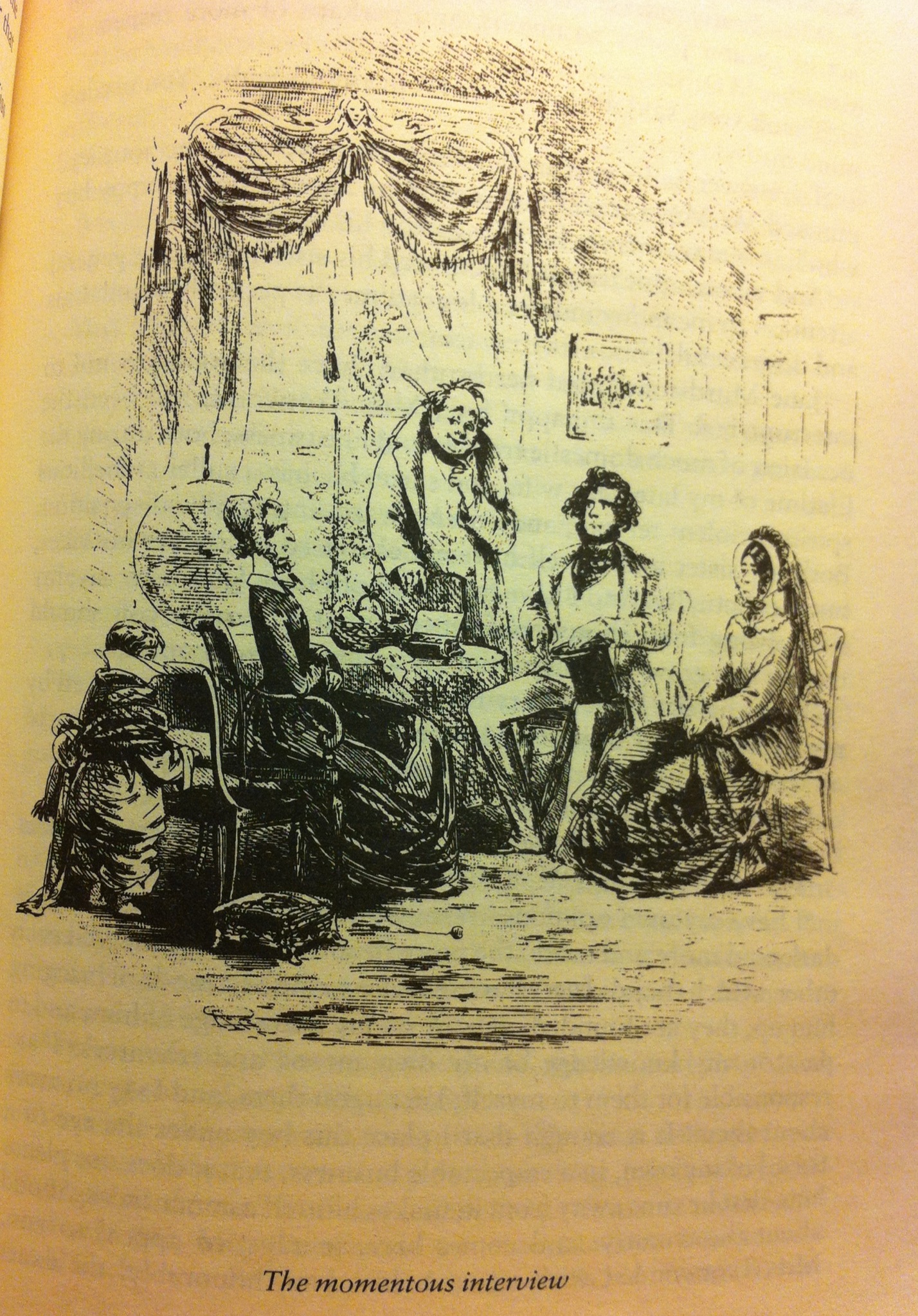
But recently I’ve taken to doing something productive with my procrastination time. I’ve been optimizing The House on the Lake. Making it reader-friendly. Breaking the long Victorian-style paragraphs into readable chunks. Plunking in pull quotes that epitomize the classic/modern hybrid that is The House on the Lake. The pull quotes simultaneously optimize the online reading experience and harken back to the illustration captions in a Dickens novel, for example, which The House on the Lake aims to evoke.

Check it out–and make no mistake–me popping in these images is for sure another exercise in procrastionation, but productive procrastination, for it’s possible that I’ll lure one new reader to The House on the Lake with this post on the craft of writing. And once the kairos comes for chapter eight (that is, once I’m ready to finish chapter eight), ain’t nothin’ gonna stop me.

This illustration from David Copperfield breaks up the text, engages the reader, and advances the plot. It also highlights how important it is that artist extraordinaire John Stern creates similarly styled illustrations for The House on the Lake.

The pull quotes in The House on the Lake function like illustration captions, drawing the eye and advancing the plot.

Posted in Art, Books, Editing, Ghosts, Writing | Tagged | 2 Comments

No New Tales to Edit

Recently I decided to stop freelance copyediting and start centering my free-time efforts on writing instead. It was a tough decision, because freelancing brings in a few extra bucks, and it keeps me apprised of what’s going on in the literary marketplace.

The last book I copyedited, for instance, was a Writer’s Digest book written by a literary agent for writers who pen stories for middle-grade and young-adult readers. Though I don’t write for MG or YA audiences, it’s interesting to apply an agent’s insights about those niches to other niches. To read about the big books in one market, Google the big books’ authors (part of the fact-checking aspect of copyediting), and identify the agents and editors and publishers the big authors work with . . .  with the object, of course, of figuring out whether those agents and editors and publishers happen to be, by any chance, looking for literary ghost stories, lacerating social satire, or charming children’s picture books.

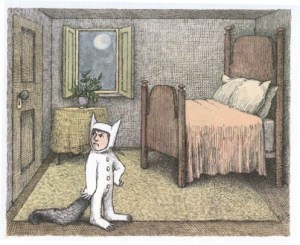
The latter is always a possibility, as people actually publish kids’ books. There’s a bevvy of quality children’s books out there, and a slew of agents and editors and publishers eager to sell more. My problem is that the particular children’s book I want to publish is missing something. The story is an adventure–rife with action, culminating in victory–but it lacks emotional dimension. You know, that resonant tone of introspection that takes place in Max’s room before the wild things emerge. That emotional atmosphere that makes the forest grow and helps Max deal with the repercussions of his wild side–going to bed without dinner. That introspection that leads him back to the comfort of his ordinary room–and the hot supper that awaits him. My kids’ story is missing that element of character growth. I have to build that in before I can start reaching out to agents and editors and publishers. But I need time to build that in. So no more editing other people’s words. Time to concentrate on strengthening my own.

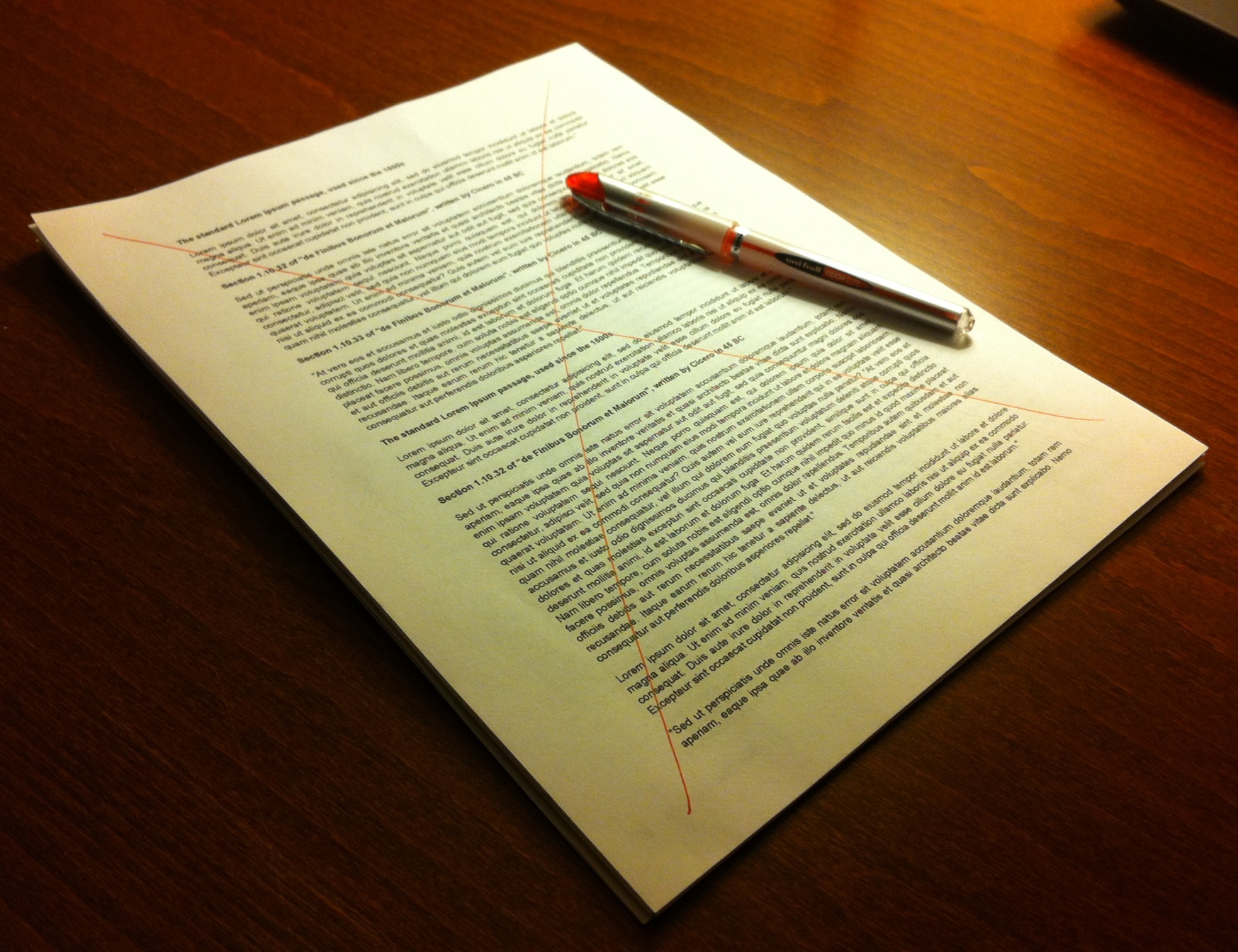
I said above that the last book I copyedited was such and such. The past-tense part makes that a lie. The truth is that the last book I’m copyediting is such and such. I’m still working on it. I’m two days behind on the deadline (and typing this blog post) and procrastinating on editing someone else’s words. Clear evidence that as much as I love editing–especially good books like the book whose manuscript is minimized at the bottom of my screen–good books written by wise, insightful, and passionate writers–my deeper love is writing my own shit, so I’ve made the right decision. I got no new tales to edit, but ten new tales to tell.

Posted in Books, Editing, Writing | Tagged , | 1 Comment